

A steeper climb
Youth Disconnection Across South King & Pierce Counties
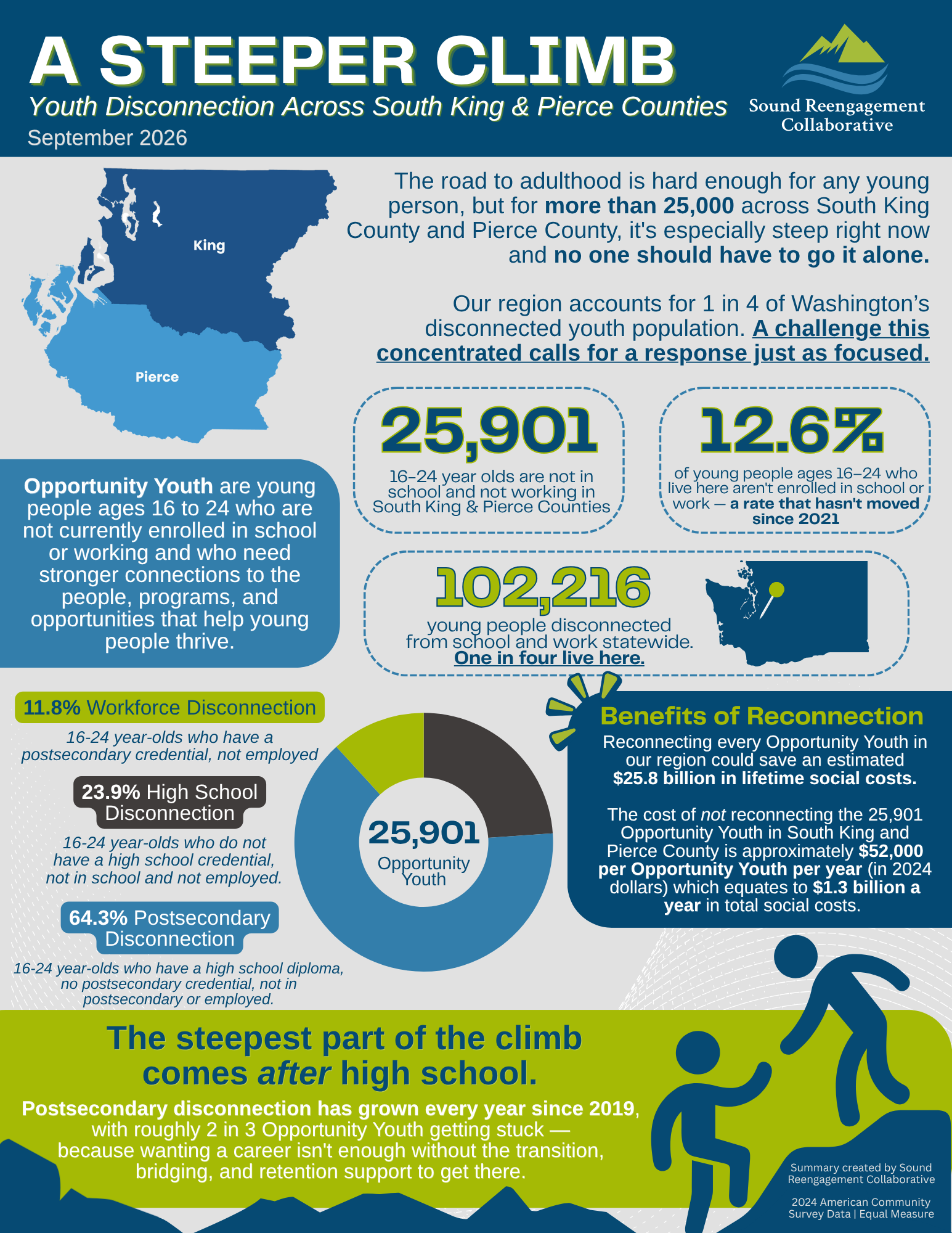
25,901
The road to adulthood is hard enough for any young person, but for more than 25,000 across South King County and Pierce County, it's especially steep right now and no one should have to go it alone.
Our region accounts for one in four of Washington’s disconnected youth population. A challenge this concentrated calls for a response just as focused.
young people ages 16-24 are
not in school and not working
in south king county and pierce county

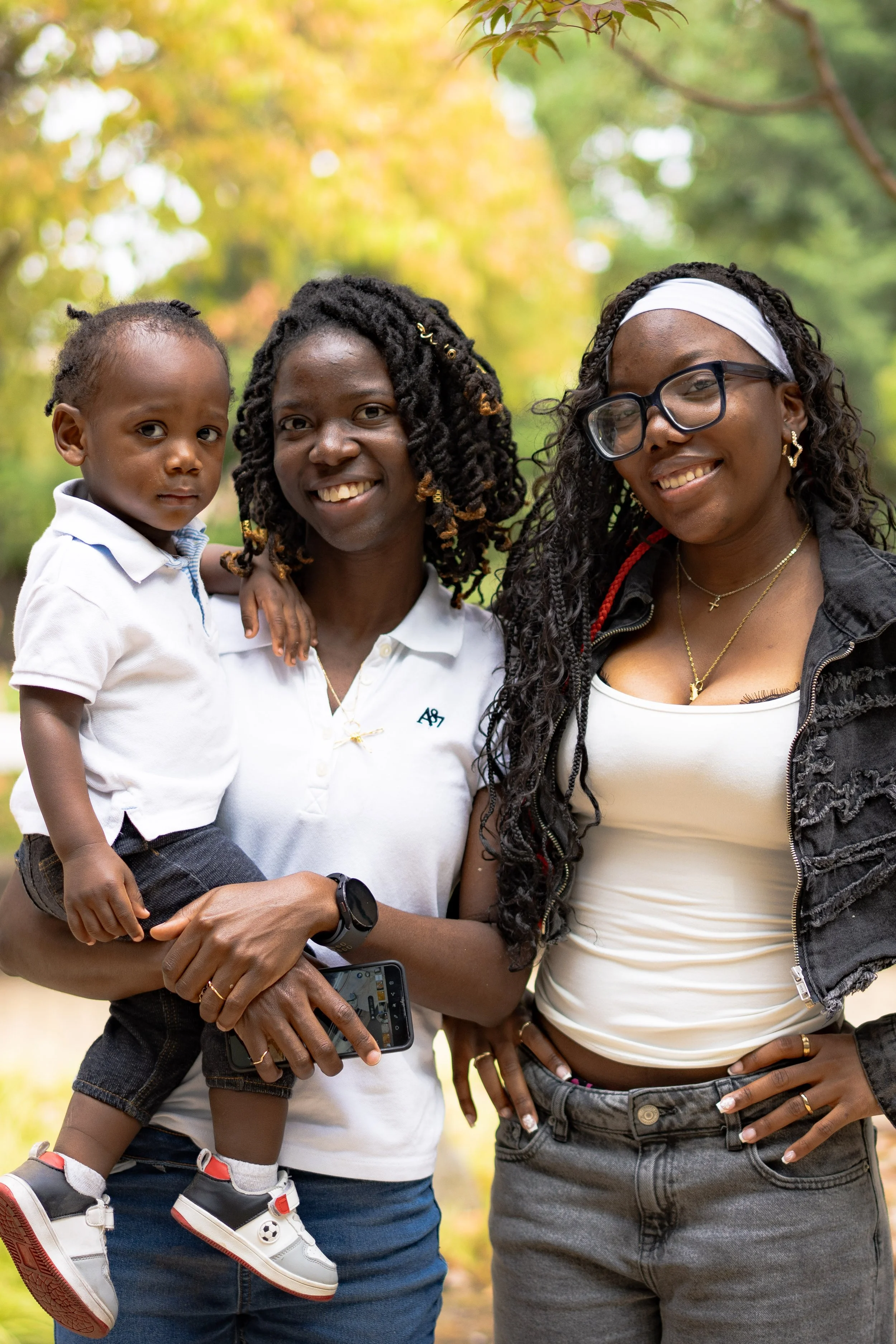
Opportunity Youth are 16 to 24 year olds not in school or working, many of whom have been impacted by foster care, child welfare, or the justice system.
As a community, we have a shared responsibility to support their growth, create pathways to opportunity, and ensure they have the resources they need to thrive.
who are opportunity youth?
Bridging the gap.
Reconnecting every Opportunity Youth in SOuth King & Pierce COunties could save an estimated $25.8 billion in lifetime social costs.
-
64.3% of our Opportunity Youth have a high school diploma but no postsecondary credential, are disconnected from postsecondary education and career training, and are unemployed.
-
23.9% of our Opportunity Youth do not have a high school diploma or GED, are disconnected from high school, and are not employed.
-
11.8% of our Opportunity Youth possess a postsecondary credential but are not currently enrolled in postsecondary education and are disconnected from the workforce.
Types of Youth Disconnection
25,901 Opportunity Youth
Regional Trends
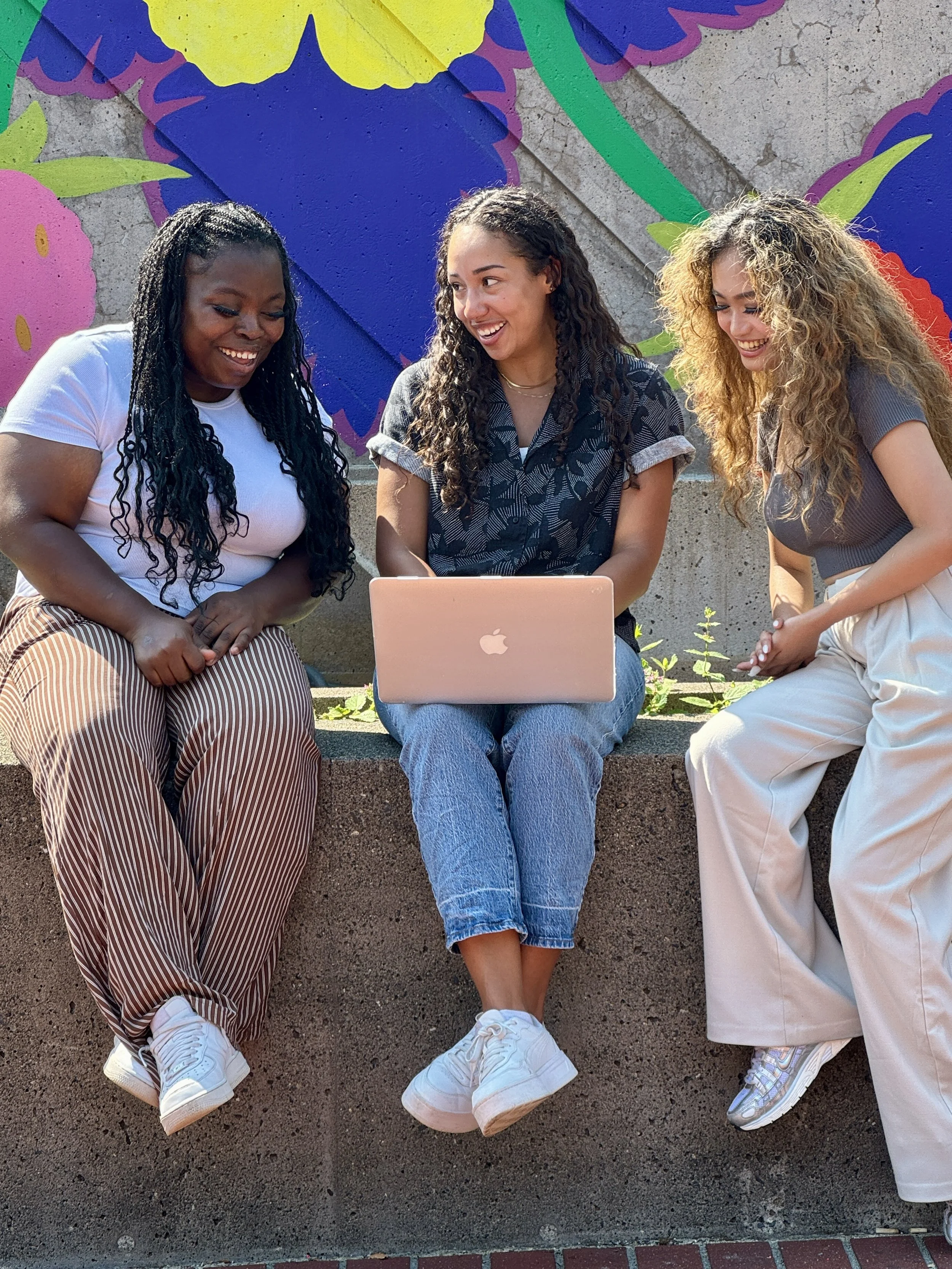
The Steepest Part Of THe CLimb Comes AFter High SChool
Postsecondary disconnection has grown every year since 2019, with roughly 2 in 3 Opportunity Youth in our region getting stuck — because wanting a career isn’t enough without the transition, bridging, and retention support to get there.
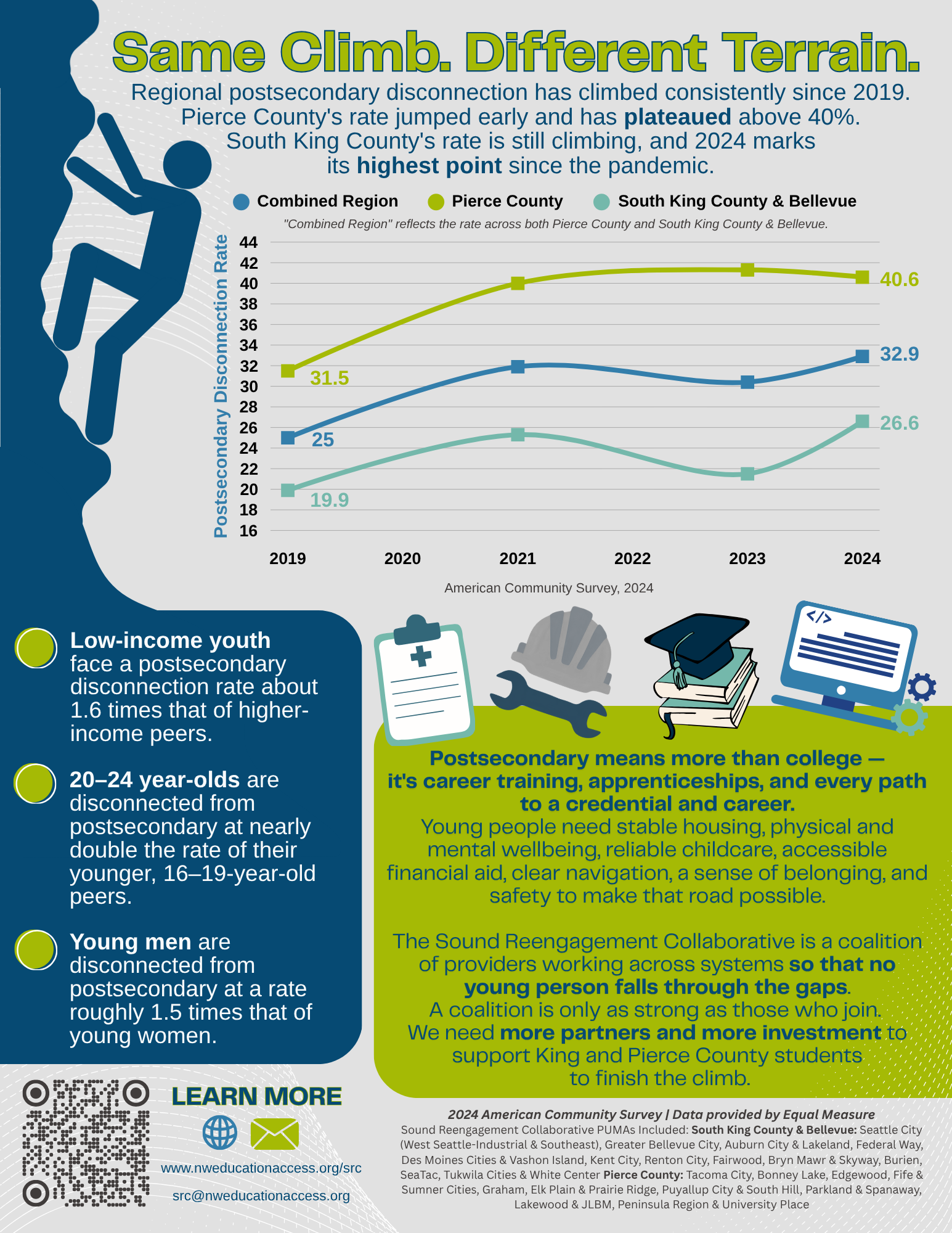
SAme Climb. Different Terrain.
Regional postsecondary disconnection has climbed consistently since 2019. Pierce County's rate jumped early and has plateaued above 40%. South King County's rate is still climbing, and 2024 marks its highest point since the pandemic.
Postsecondary Disconnection Rates
Low-income youth face a postsecondary disconnection rate about 1.6 times that of higher-income peers.
20–24 year-olds are disconnected from postsecondary at nearly double the rate of their younger, 16–19-year-old peers.
Young men are disconnected from postsecondary at a rate roughly 1.5 times that of young women.
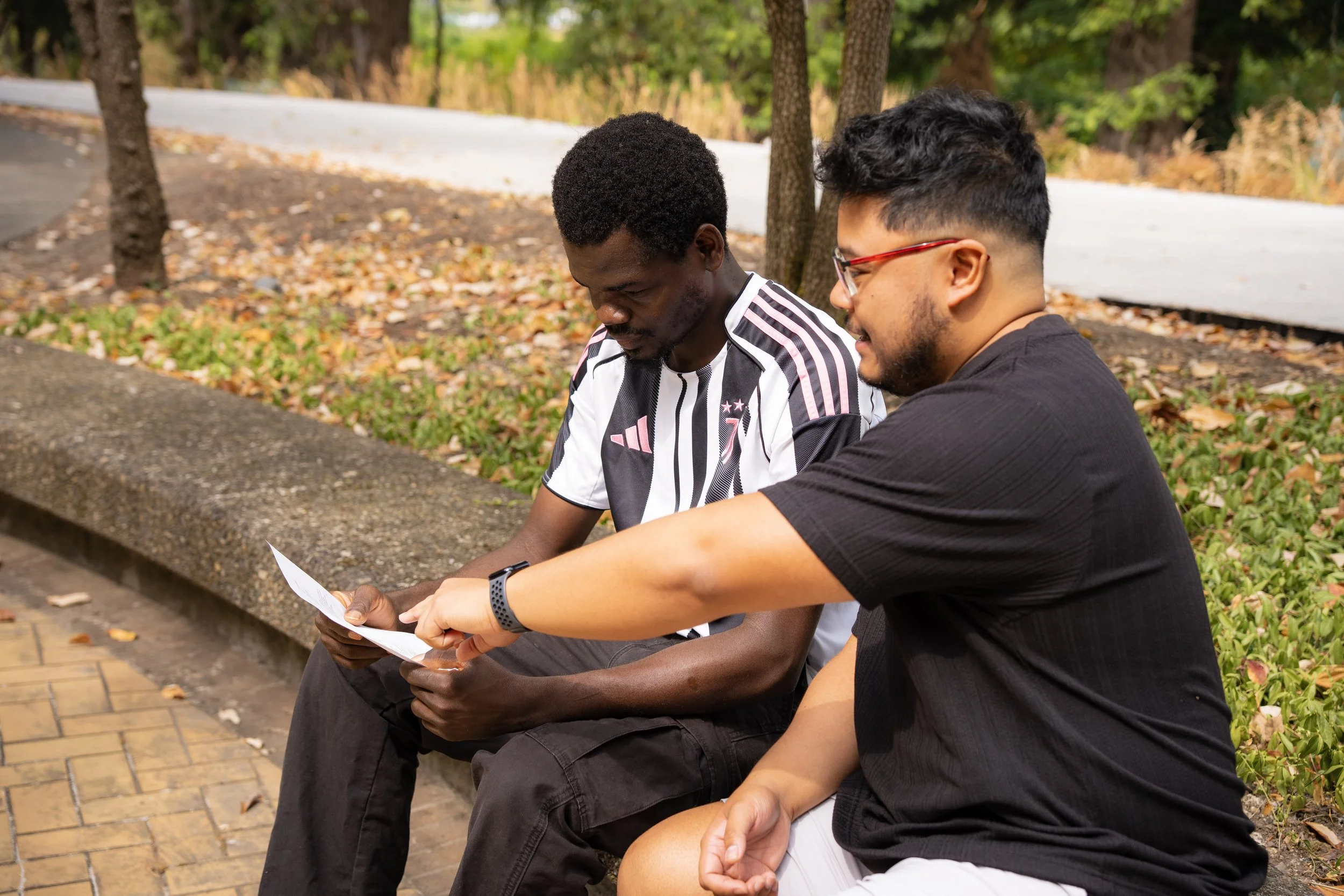

Postsecondary means more than college — it's career training, apprenticeships, and every path to a credential and career.
Young people need stable housing, physical and mental wellbeing, reliable childcare, accessible financial aid, clear navigation, a sense of belonging, and safety to make that road possible.
Learn More About Our Youth Reengagement Goals & Strategies

The Sound Reengagement Collaborative is a coalition of providers working across systems so that no young person falls through the gaps.
A coalition is only as strong as those who join. We need more partners and more investment to support King and Pierce County students to finish the climb.
Visuals created by Northwest Education Access. Data prepared by Equal Measure as part of the Opportunity Youth Forum Common Measures Community Report using the 2024 American Community Survey.
The Economic Benefits of Opportunity Youth Supports in Seattle-Tacoma, 2026 by Equal Measure
Sound Reengagement Collaborative(SRC) Regional PUMAs Included:
South King County & Bellevue: Seattle City (West Seattle-Industrial & Southeast), Greater Bellevue City, Auburn City & Lakeland, Federal Way, Des Moines Cities & Vashon Island, Kent City, Renton City, Fairwood, Bryn Mawr & Skyway, Burien, SeaTac, Tukwila Cities & White Center
Pierce County: Tacoma City, Bonney Lake, Edgewood, Fife & Sumner Cities, Graham, Elk Plain & Prairie Ridge, Puyallup City & South Hill, Parkland & Spanaway, Lakewood & JBLM, Peninsula Region & University Place