
What Youth Researchers Found: Wellbeing, Belonging, and the Path to Education and Career Goals
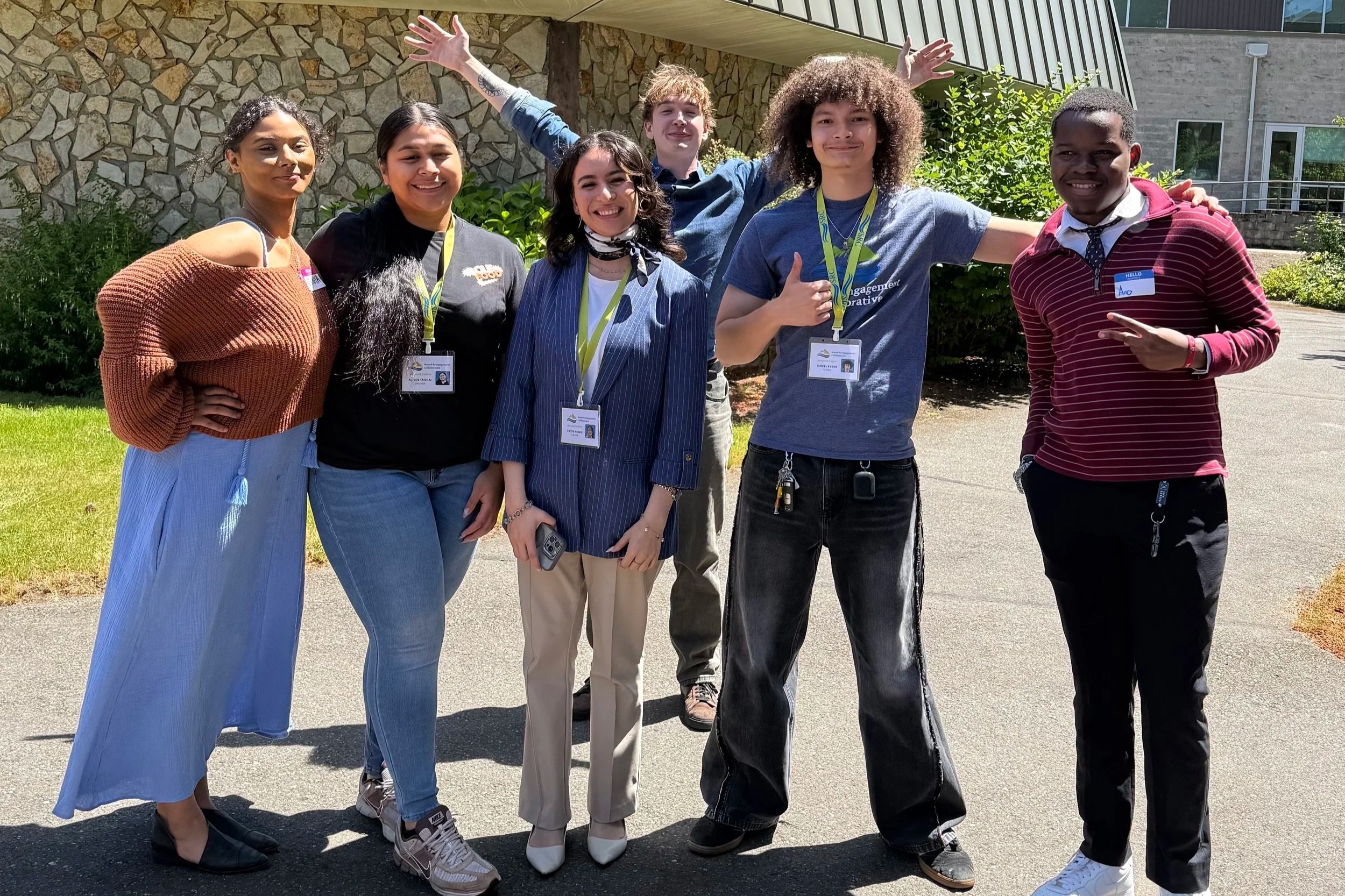
A summary of findings from the Sound Reengagement Collaborative Fellowship Research Project, presented by Nekaiya Lapsley, Alissa Tagoai, Hadya Hamed, Nathaniel Perry, Daniel Evans, and Ano Chivese (pictured left to right).
Six youth research fellows representing partners across South King and Pierce Counties recently completed a 10-month paid research experience through the Sound Reengagement Collaborative (SRC). Using the Youth Participatory Action Research (YPAR) framework — which centers youth voice and agency and community transformation — the fellows designed and conducted their own research to explore a central question:
What strategies can programs use to promote participants' overall wellbeing and enable greater focus on education and career advancement?
Their findings offer a grounded, qualitative and quantitative data-driven look at what's working, what's missing, and what youth say they need.
Why Youth-Led Research Matters
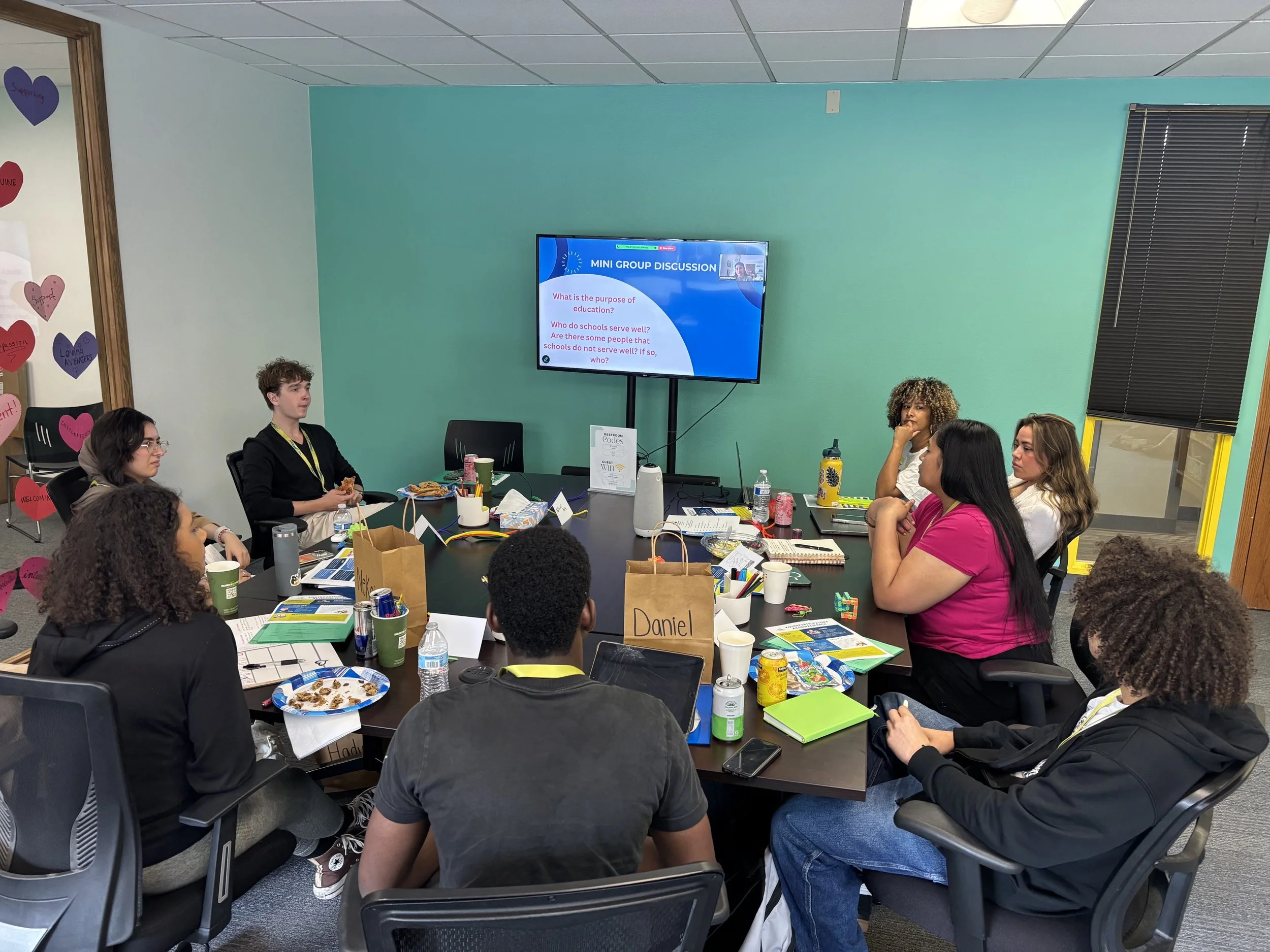
The YPAR framework starts from a simple premise: the people closest to an issue are best positioned to study it. Because these fellows shared lived experience with the barriers they were examining, their research reflects real needs rather than assumptions. This approach also helps build trust between programs and the communities they serve, and ensures findings are relevant and actionable for participants.
How the Research Was Conducted
The fellows used two complementary methods:
Quantitative: A 35-item survey using a 1–5 Likert scale, organized into four sections — About You, Emotional and Mental Wellbeing, Social Belonging and Support, and Program Experience.
Qualitative: Four audio diary entries recorded over two weeks, with four prompts per entry. Fellows designed the prompts to explore patterns in participant experiences, emotions, and perspectives — and to go deeper on themes the survey data surfaced. The audio diary format was chosen specifically because it allows for authentic self-expression and captures how wellbeing shifts from day to day.
Who Was Studied
The survey reached 34 participants ages 18–29 currently enrolled in SRC-affiliated programs in King County (62%) and Pierce County (38%). Participants were enrolled in high school completion or GED programs (91%), career training programs (59%), and community-based programs (50%), with 50% enrolled in all three simultaneously. The participant group was racially diverse (26 of 24 BIPOC) and majority cisgender women (15 of 34), with a range of housing situations — from renting to couch surfing to being unhoused.
As part of the participatory research design, research fellows served as both researchers and participants in the audio diary study, documenting and reflecting on their own experiences over time. This approach allowed fellows to engage in the research process from both the researcher and participant perspectives.
What the Data Showed
Program Experience — the strongest area (mean: 4.07 / 5)
Participants rated their overall program experience positively, with especially high marks for feeling welcomed (4.12/5), program flexibility (4.12/5), and having their resource needs met (4.0/5). The data analysis concludes that staff have done a strong job creating welcoming, supportive environments and that programs are on the right track.
However, several items fell below the 4.0 threshold and warrant attention:
Staff referral to outside programs: 3.65
Awareness of all available resources: 3.76
Comfort confiding in staff: 3.85
Program increasing confidence: 3.85
Mental and Emotional Wellbeing — the area of greatest concern (mean: 3.47 / 5)
This was the lowest-scoring section, with multiple items flagged below 3.5:
Wellbeing feeling stable and consistent: 2.94
Confidence in coping with stress: 3.00
Self-rating of mental/emotional wellbeing: 3.09
Having experienced mental hardship: 3.50
Fellows noted that these scores reflect the reality that participants are managing ongoing personal hardships that directly affect their capacity to cope and thrive.
Social Belonging and Support — a mixed picture (mean: 3.79 / 5)
Participants' highest social support score came from program staff, particularly in King County (4.19). But support from family, peers, and friends all scored below 4.0 — and the overall network of support (family, peers, friends) fell below 3/5:
Rely on family for support: 3.32
Rely on peers for support: 3.59
Rely on friends for support: 3.65
Having a strong support network: 3.85
What Participants Said (Audio Diary Highlights)
The qualitative data added depth and texture to the numbers. Mental wellbeing came up 148 times across diary entries — 87 times in a positive context and 62 times negatively. Program experiences were described positively 110 times, with only 5 negative mentions.
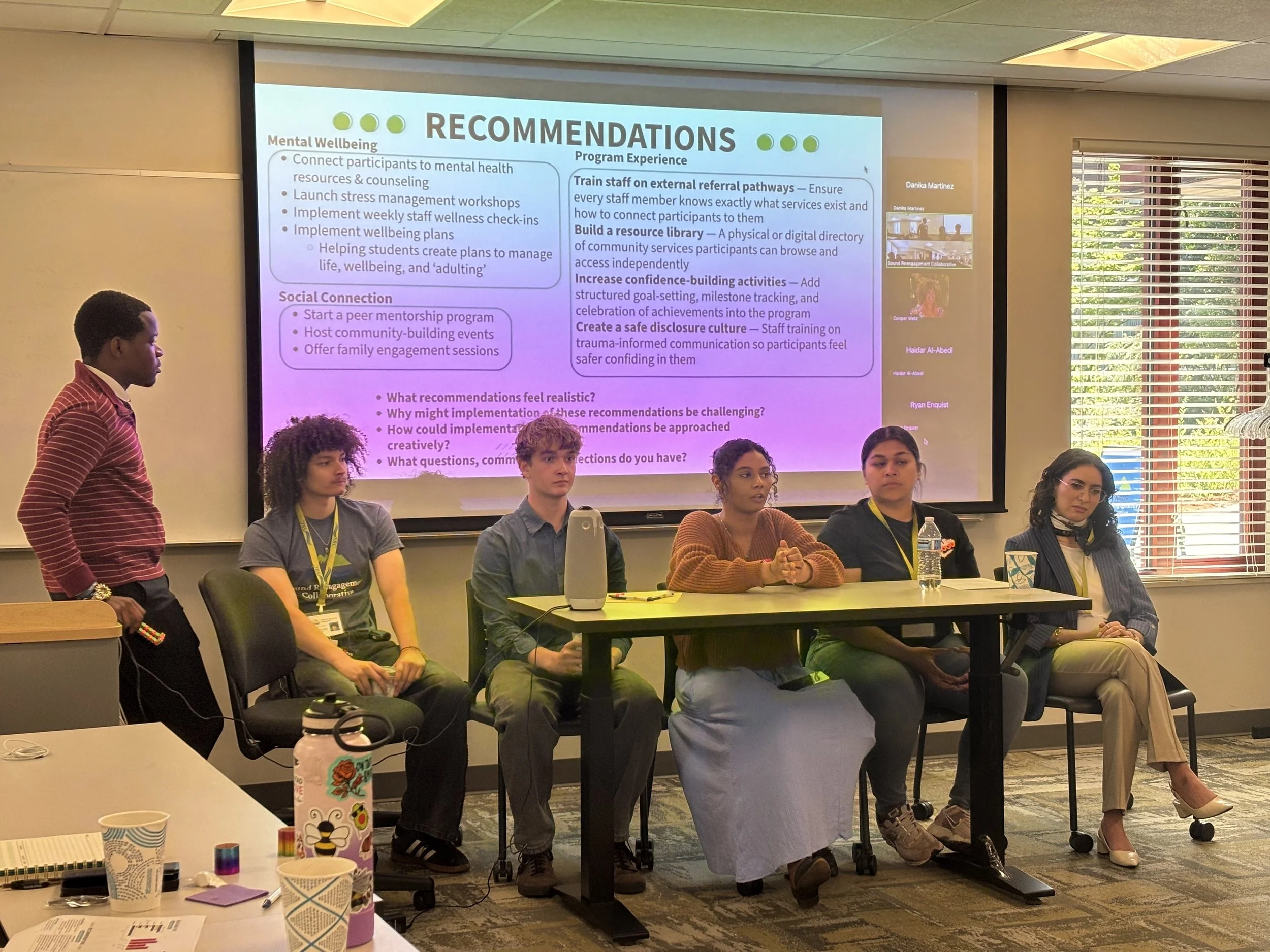
In their own words:
Participants identified trauma, motivation, and time management as the most common forces negatively affecting their wellbeing — all falling under what one participant described as the challenge of "adulting": managing employment, physical and mental health, finances, community, and life responsibilities simultaneously.
"Outside factors affecting my wellbeing include stress about stability and responsibility, finances, and trying to plan for my future while also managing everyday challenges."
"We aren't always noticing wellbeing or helping people understand their own wellbeing and what they need to maintain it."
"Programs could offer more individualized support — mental health resources or regular wellness check-ins could help participants feel supported beyond just academics or career goals."
"People who struggle with emotional regulation and with deescalating crisis and problem-solving… they don't feel heard and valued."
Recommendations
Fellows organized their recommendations into three areas:

Mental Wellbeing
Connect participants to mental health resources and counseling
Launch stress management workshops
Implement weekly staff wellness check-ins
Help participants create individualized wellbeing plans that address life, stress, and "adulting"

Social Connection
Start a peer mentorship program
Host community-building events
Offer family engagement sessions
Program Experience
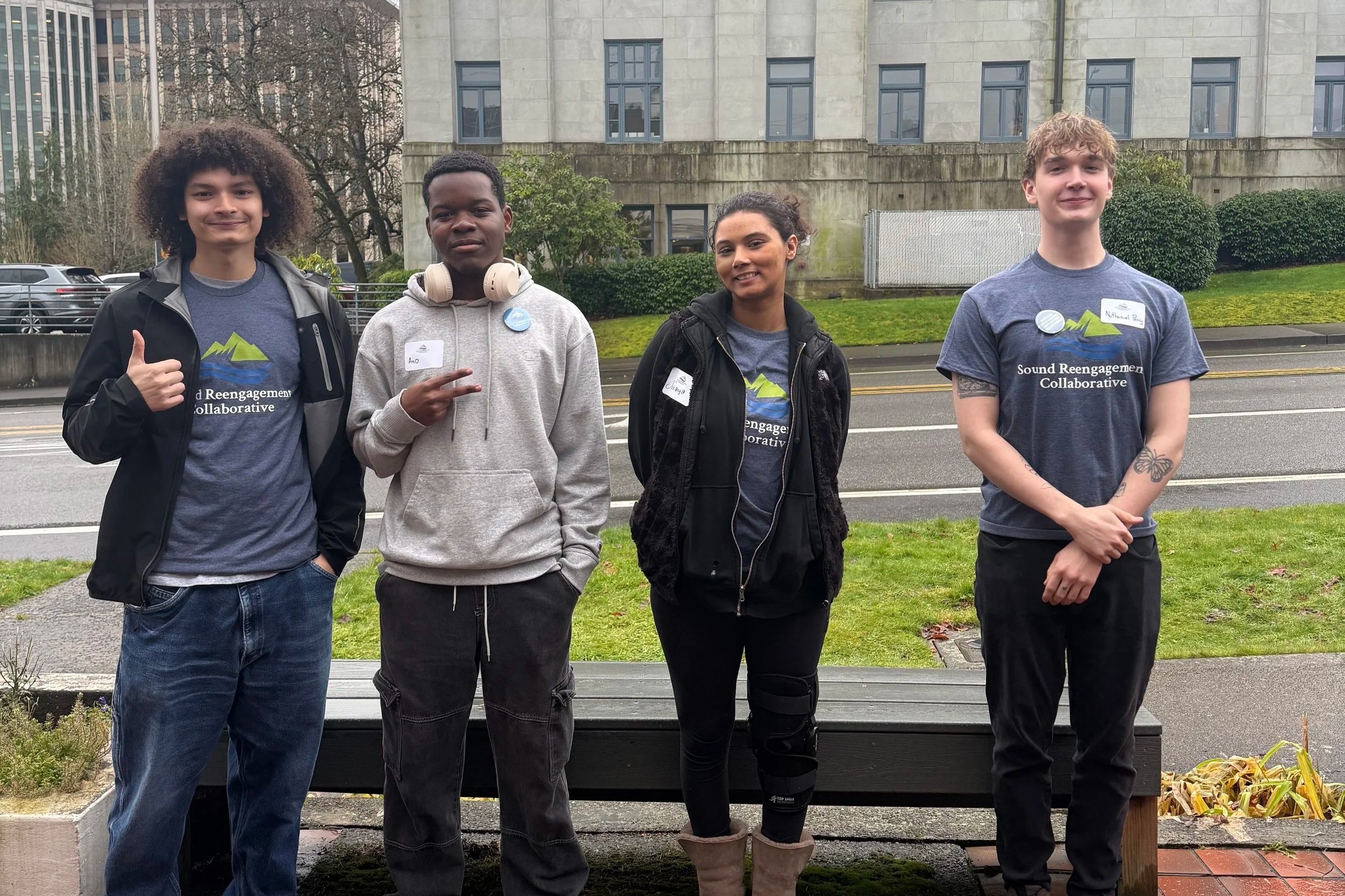
Train staff on external referral pathways so every team member knows how to connect participants to services
Build a physical or digital resource library participants can access independently
Add structured goal-setting, milestone tracking, and achievement celebrations to build confidence
Invest in trauma-informed communication training to create a safer culture of disclosure
Closing Reflection
This research was produced by young people who understand firsthand what it means to navigate education and employment while managing life's complexity. Their work affirms that Sound Reengagement Collaborative-affiliated programs are doing meaningful things right — and that with deeper investment in wellbeing support, resource transparency, and trust-building with staff, those programs can go even further.
The fellows themselves named the experience as a source of personal and professional growth, noting wins including cooperation across the team, development of new research skills, and space for reflection and insight. Their work is a model for what youth-centered research can look like — and what it can produce.
The SRC Fellowship Research Project was conducted under the Youth Participatory Action Research (YPAR) framework as part of the Sound Reengagement Collaborative's commitment to centering participant voice in our collaborative network development. We are grateful for the wisdom that Alissa, Ano, Nekaiya, Nathaniel, Daniel, and Hadya shared with us and are proud of the work they conducted on this research project.
