
Sept. 11, 2026 | Network Meeting
September Recap: The Challenge Is What Comes After High School
Thank you to everyone who joined us on September 11 for our first network meeting of the new academic year! We welcomed new faces, reconnected with longtime partners, and spent most of our time on the 2024 regional youth disconnection data. Here's what we learned.
The Big Picture
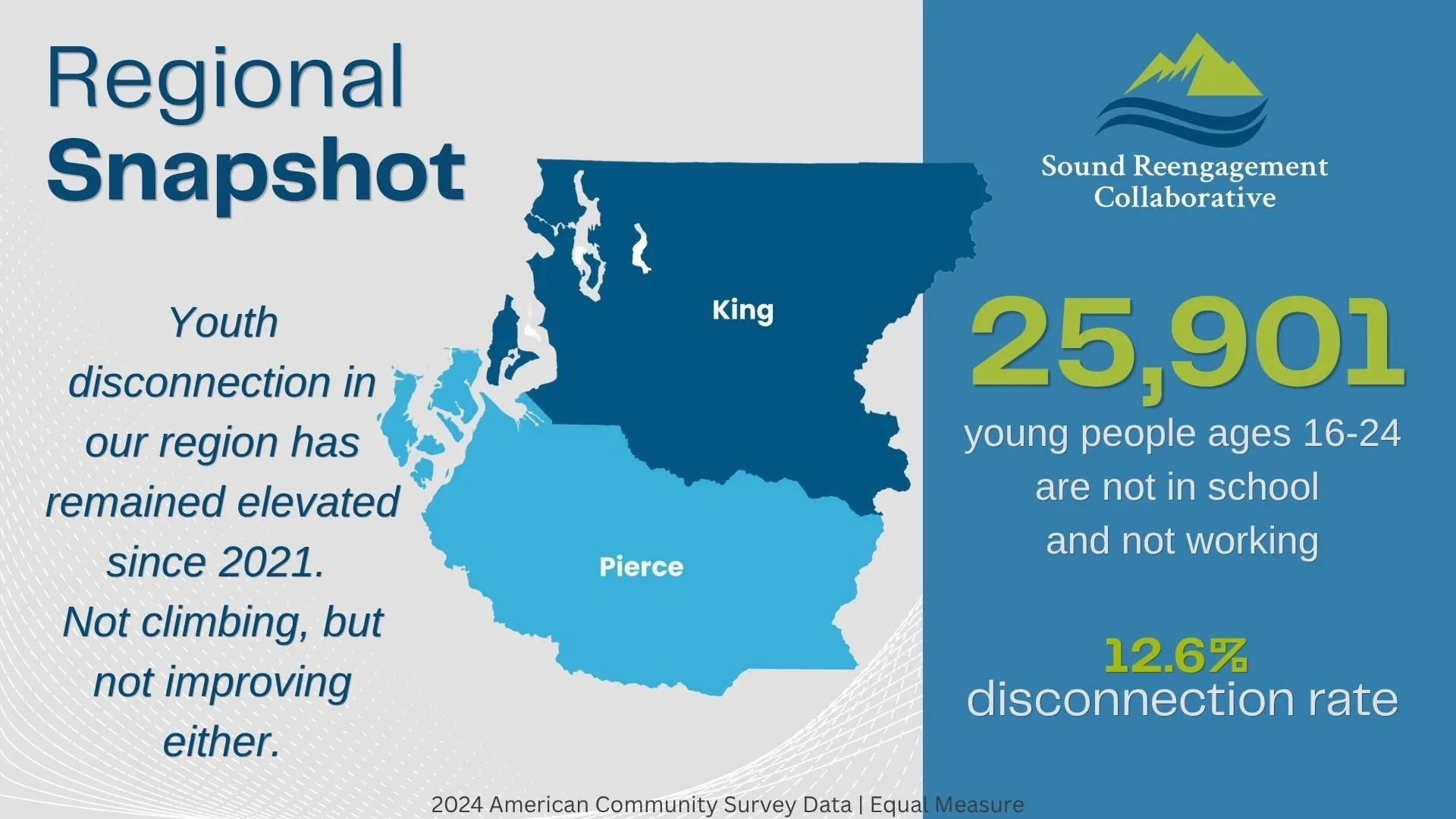
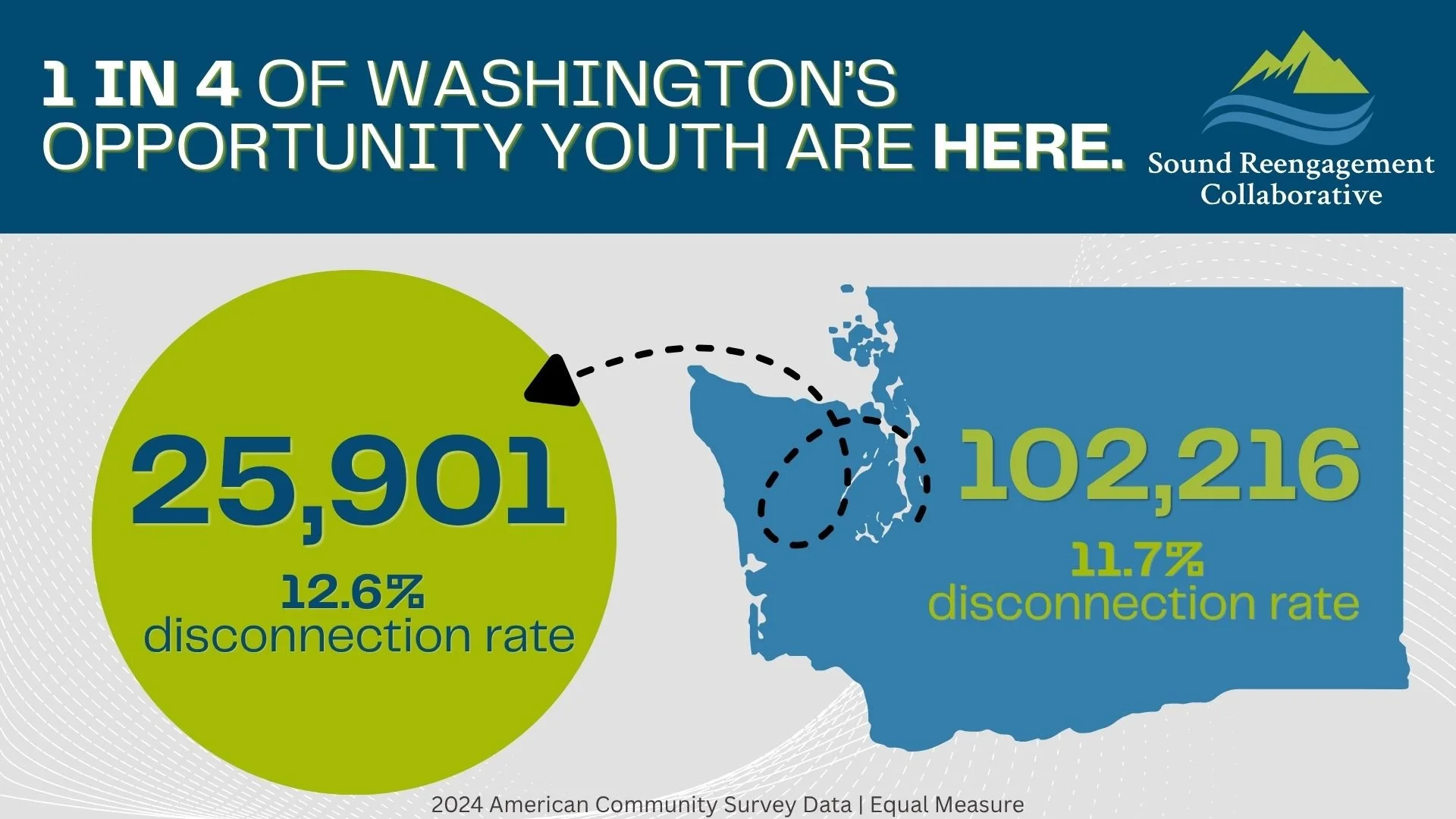
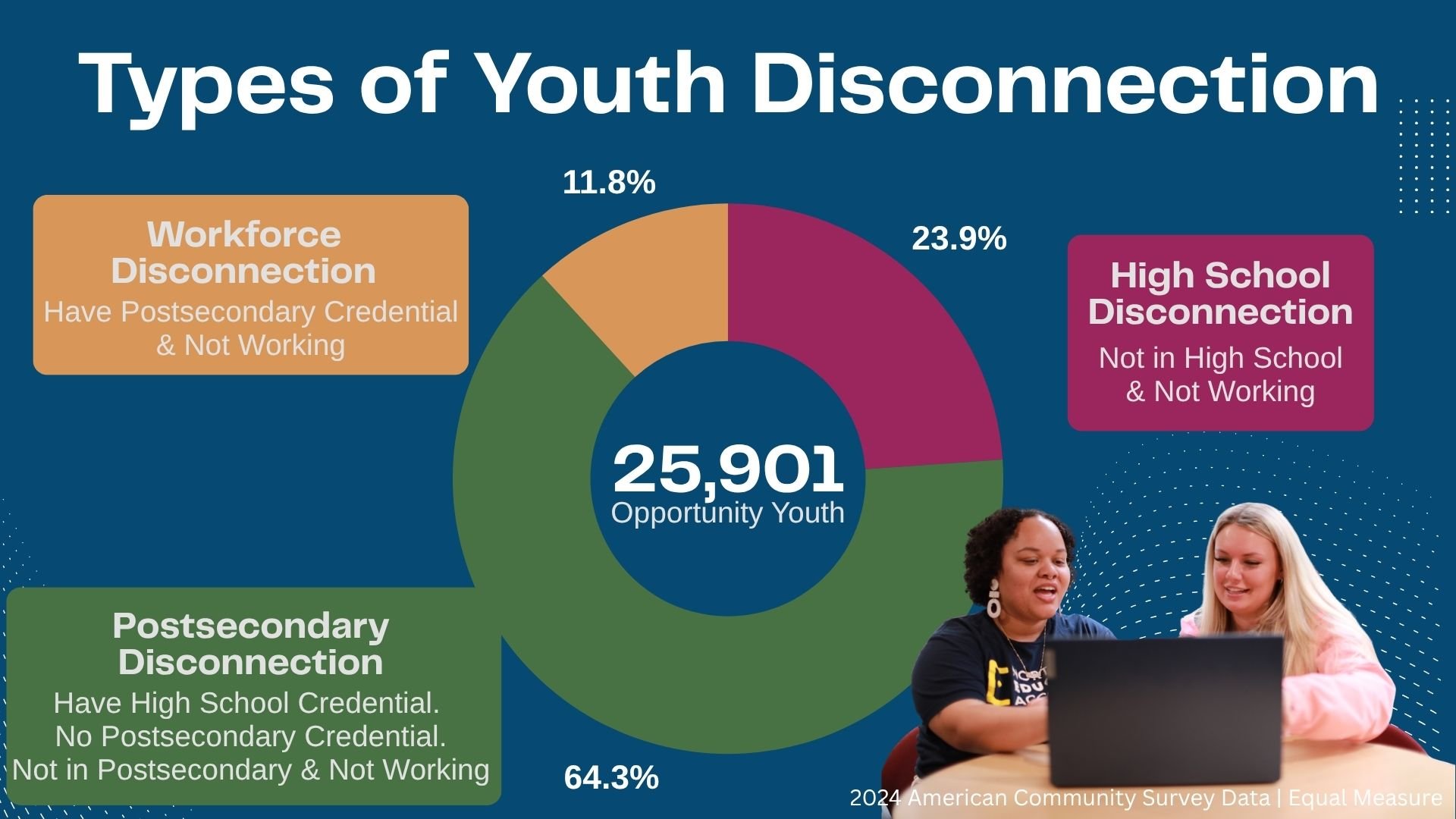
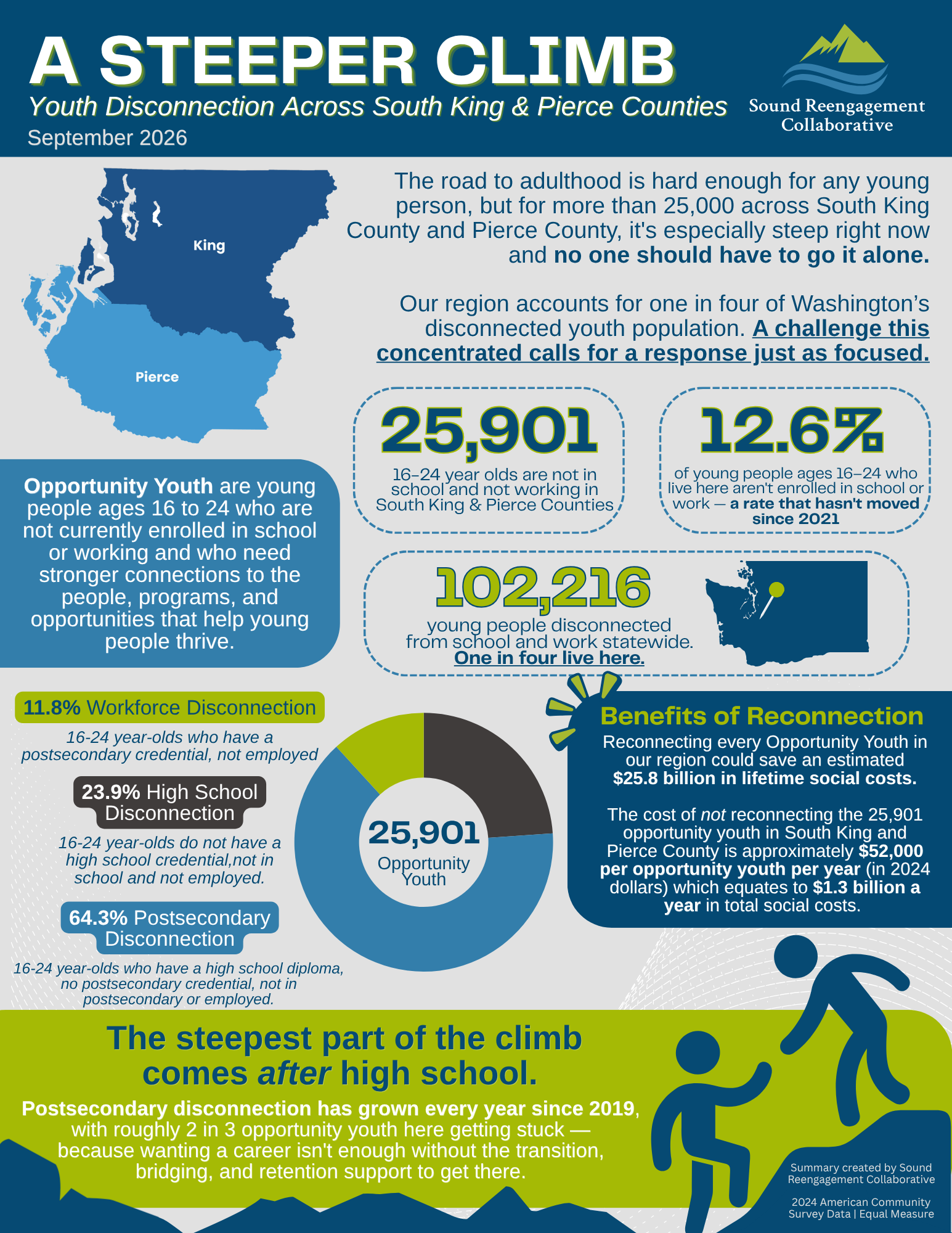
25,901 young people ages 16–24 in our region are not in school and not working. That's a 12.6% disconnection rate, above the statewide rate of 11.7%. Our region is home to 1 in 4 of Washington's 102,216 opportunity youth.
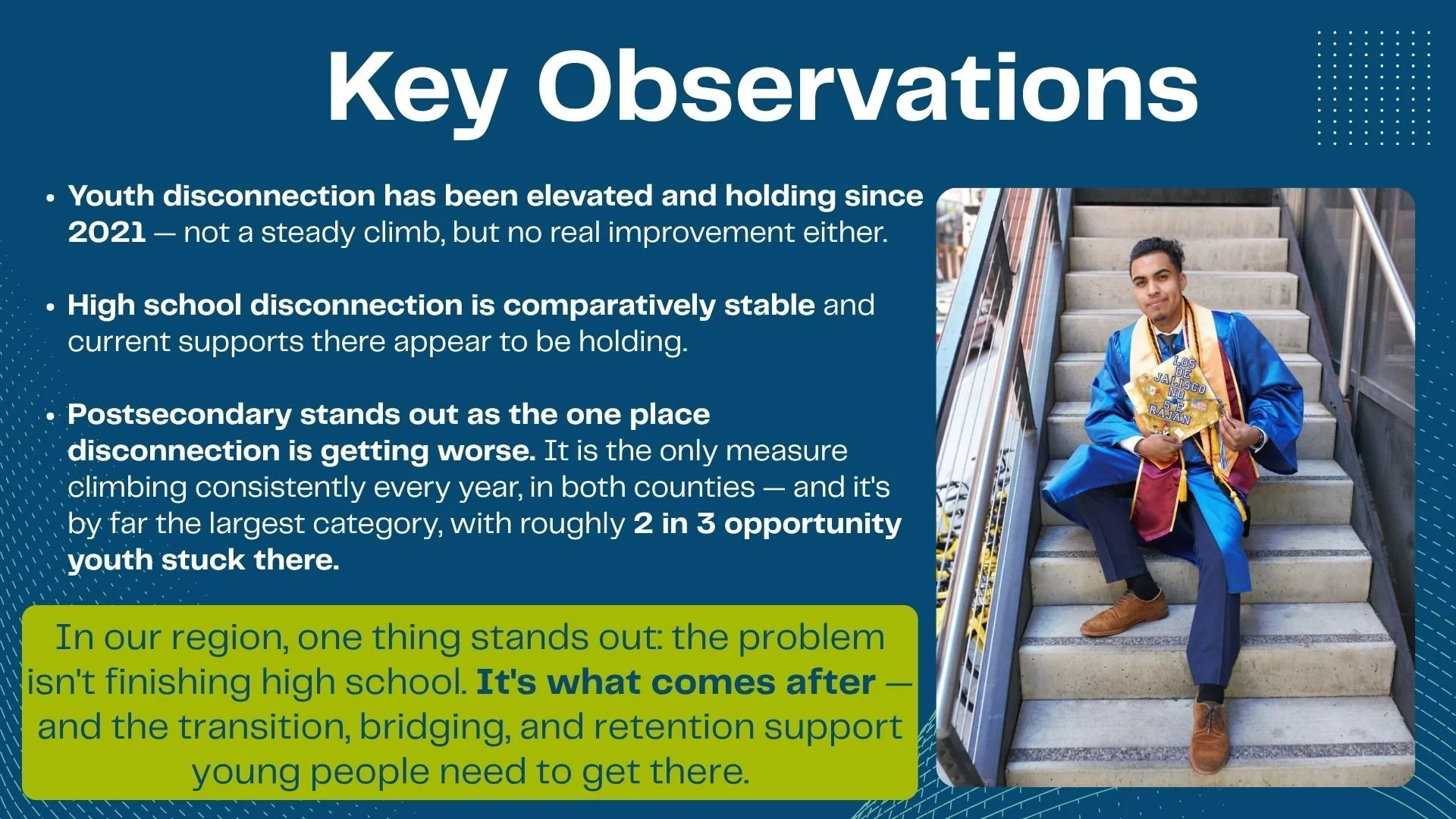
Youth disconnection in our region has stayed elevated since 2021. It's not climbing, but it's not improving either.
The Main Takeaway: Postsecondary Disconnection
When we looked at where young people are disconnecting, one pattern stood out.
About 2 in 3 opportunity youth (64.3%) have a high school diploma or GED, but no postsecondary credential, and aren't working. By comparison, 23.9% haven't finished high school, and 11.8% have a postsecondary credential but aren't working.
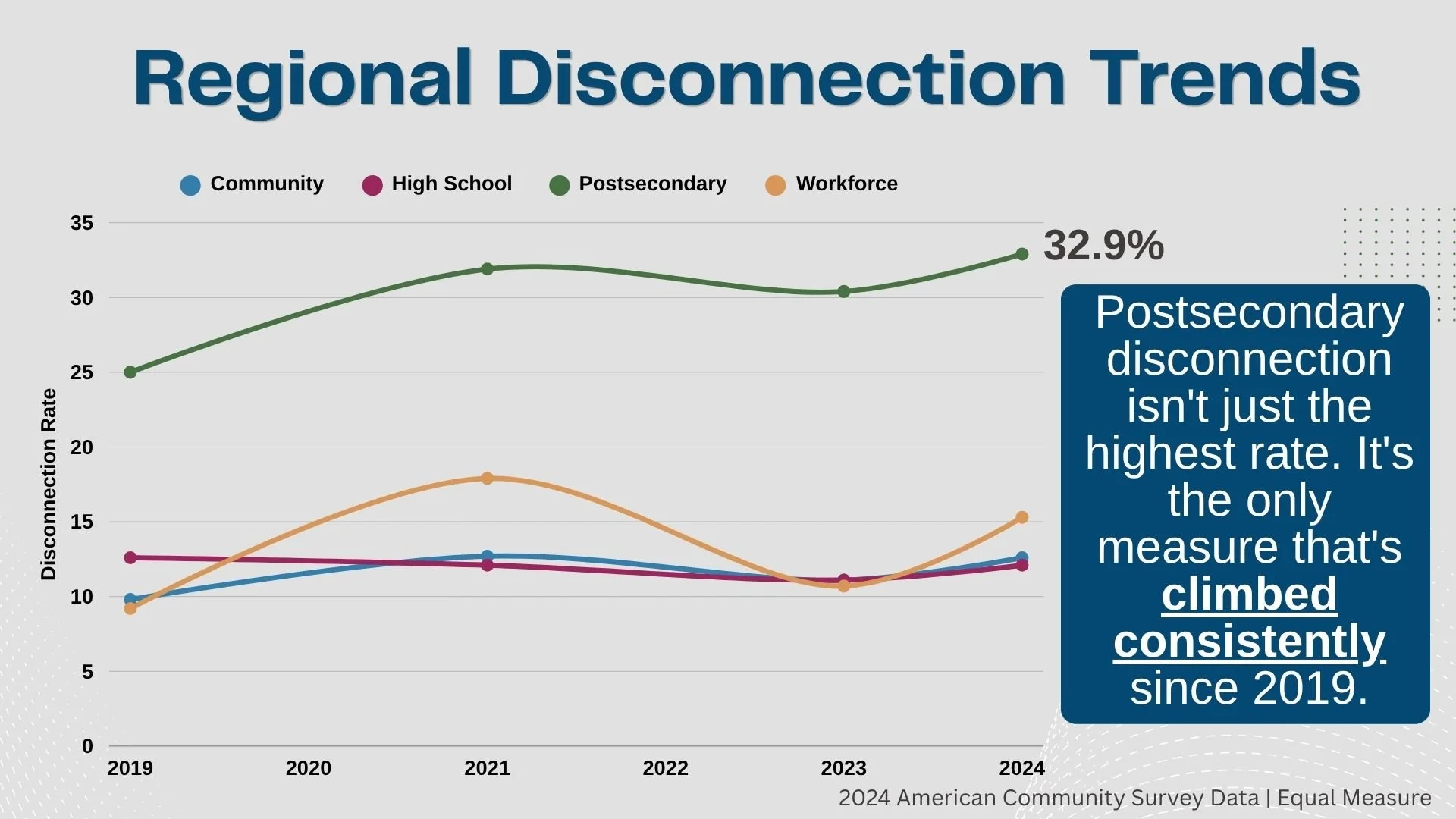
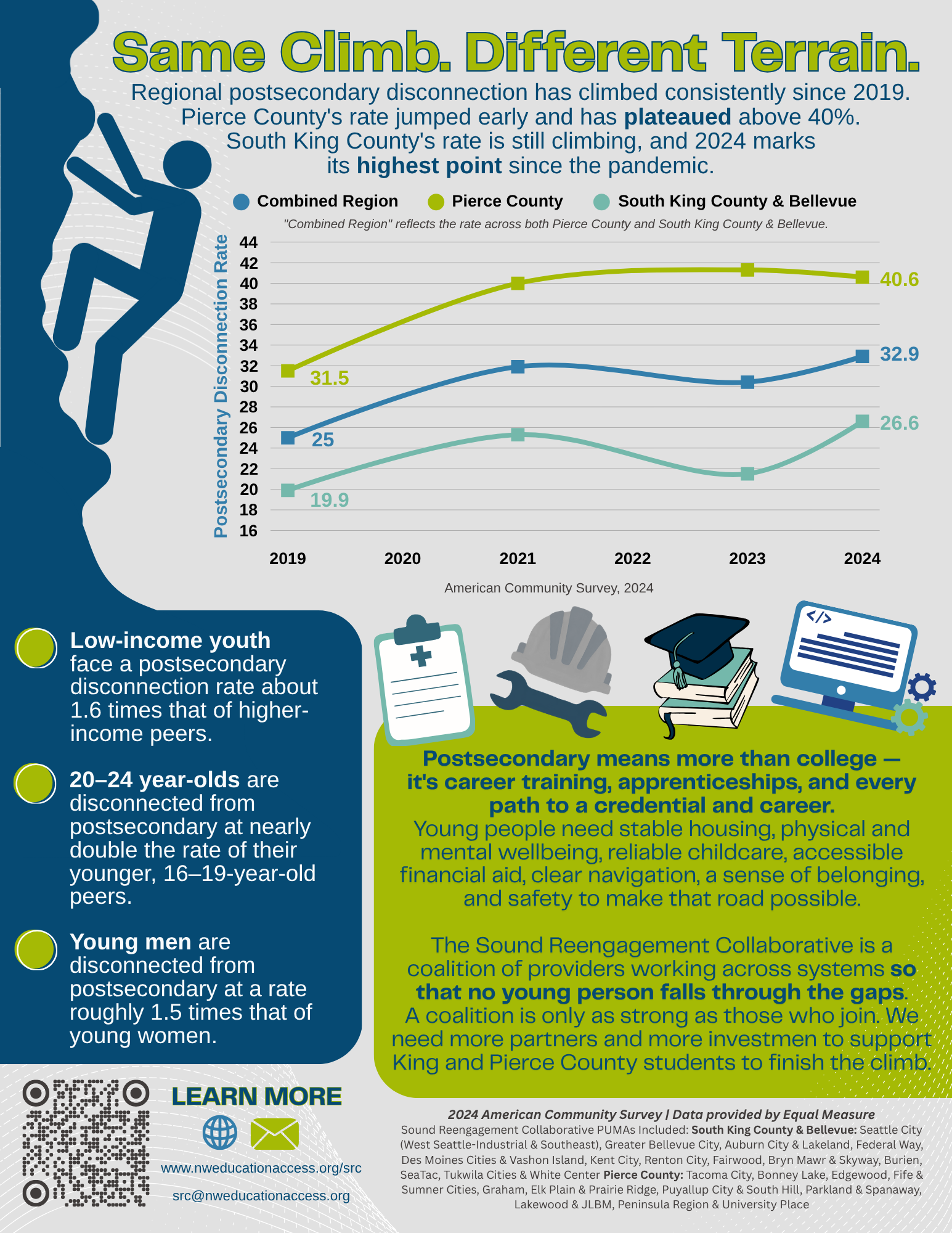
Postsecondary disconnection is now at 32.9%. It's the highest rate we track, and it's the only one that has climbed steadily since 2019. This is happening in both counties, but in different ways:
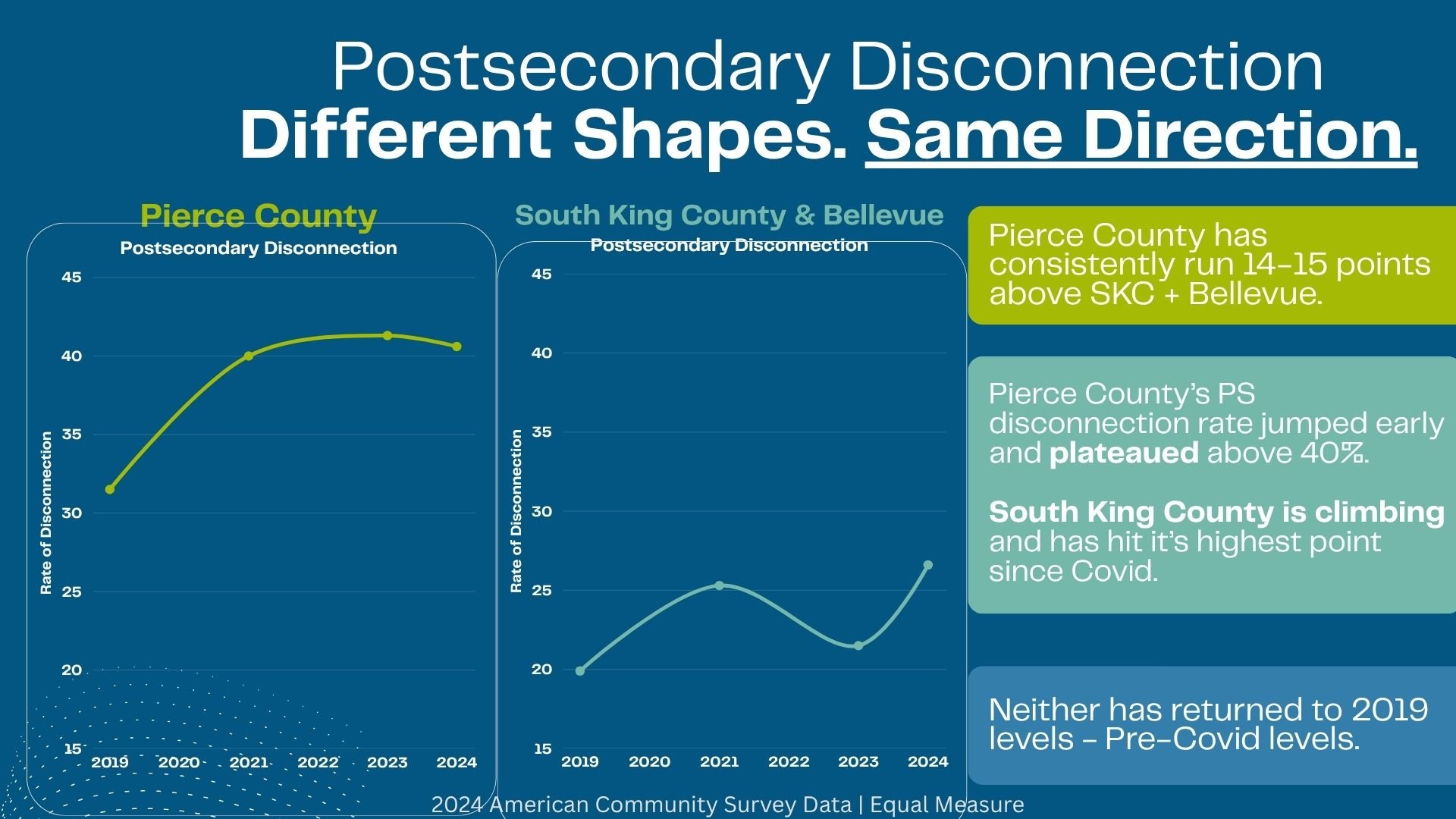
Pierce County has consistently run 14–15 points higher than South King County & Bellevue. Its rate jumped early in the pandemic and has stayed above 40%.
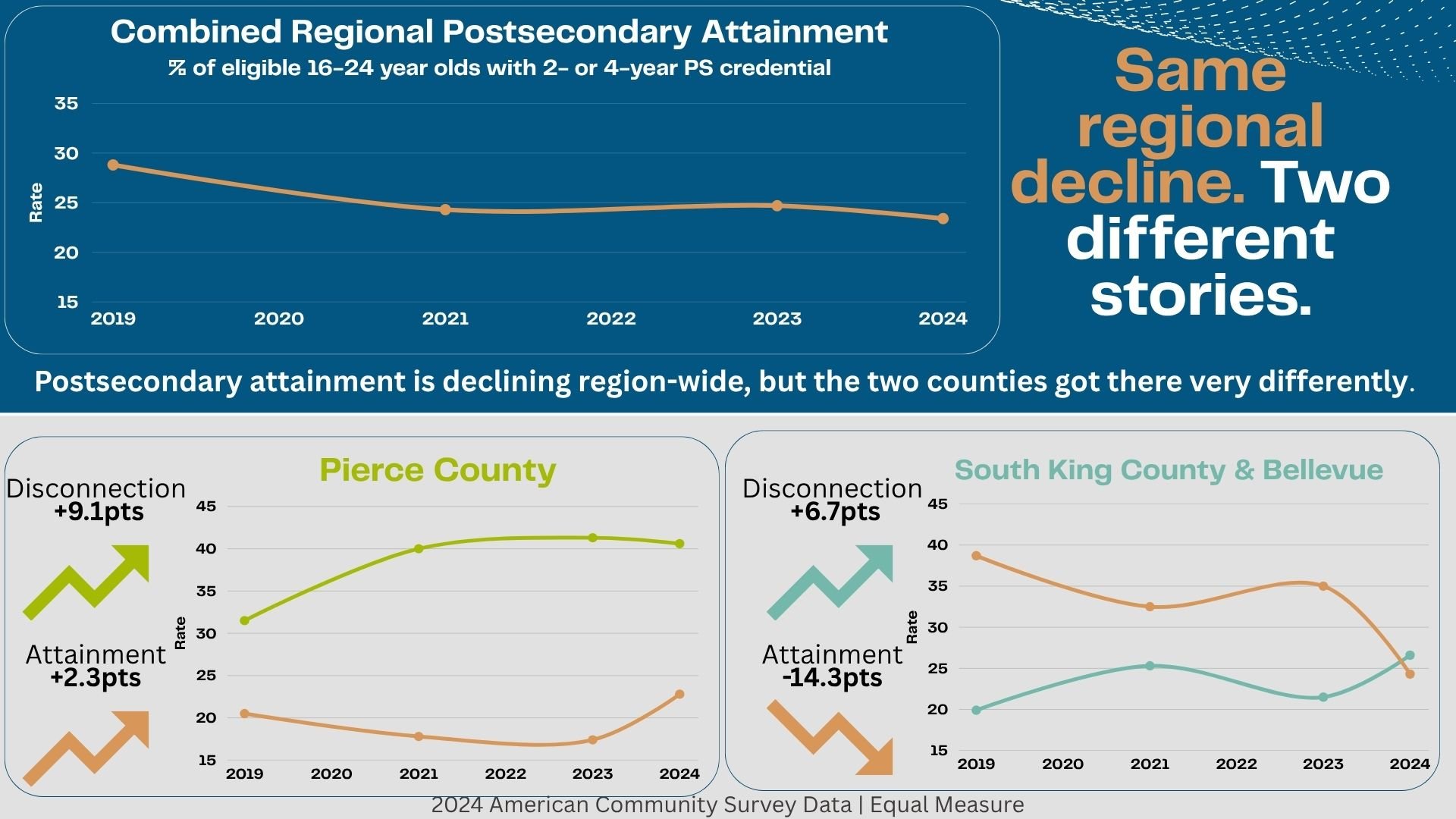
South King County & Bellevue is climbing and has reached its highest point since COVID. Postsecondary attainment there dropped 14.3 points since 2019.
Neither area has returned to pre-COVID levels.
Who Is Most Affected
Among young people with a high school credential but no postsecondary credential, some groups are disconnected at much higher rates:
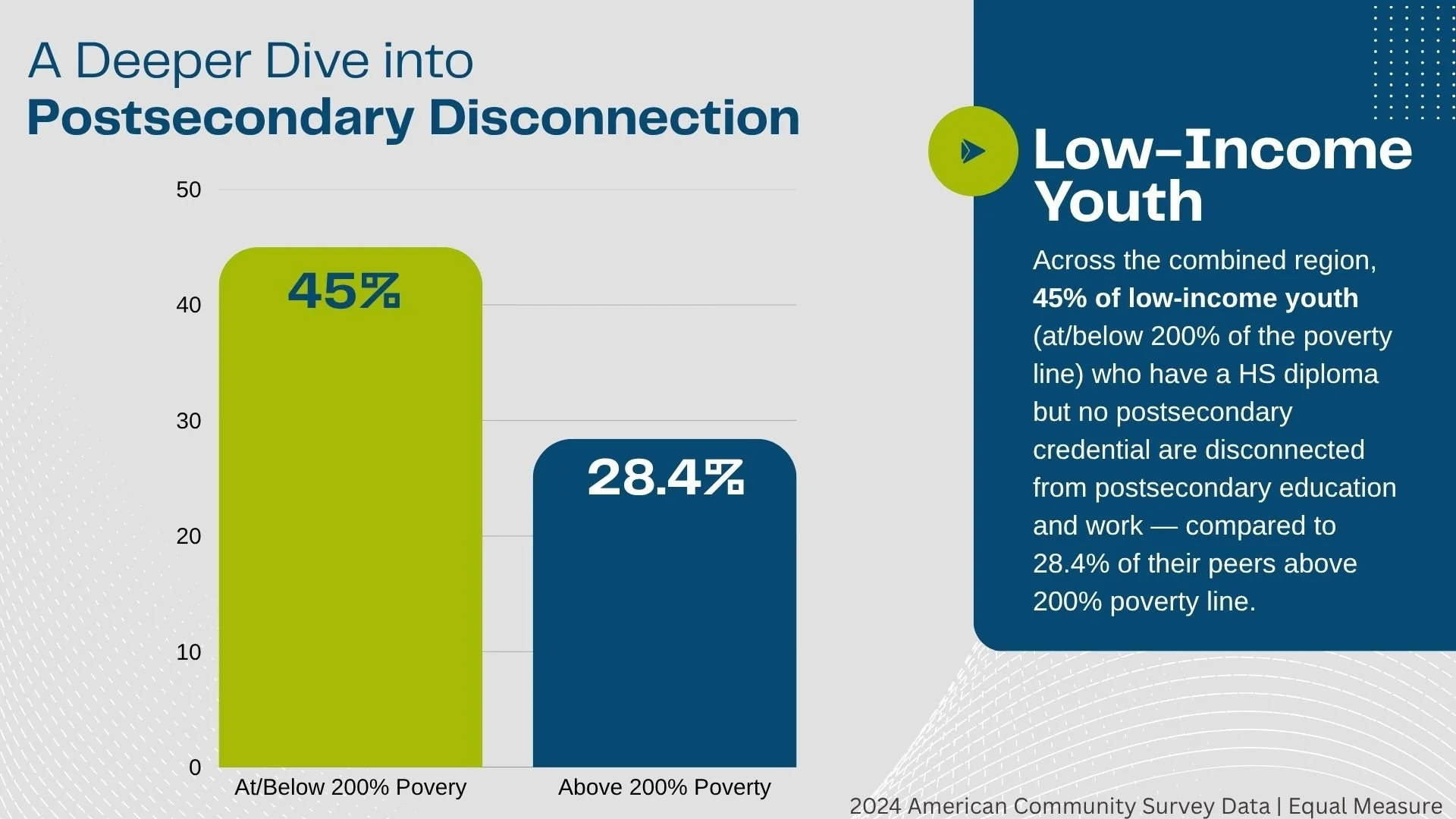
Low-income youth face a postsecondary disconnection rate about 1.6 times that of higher-income peers.
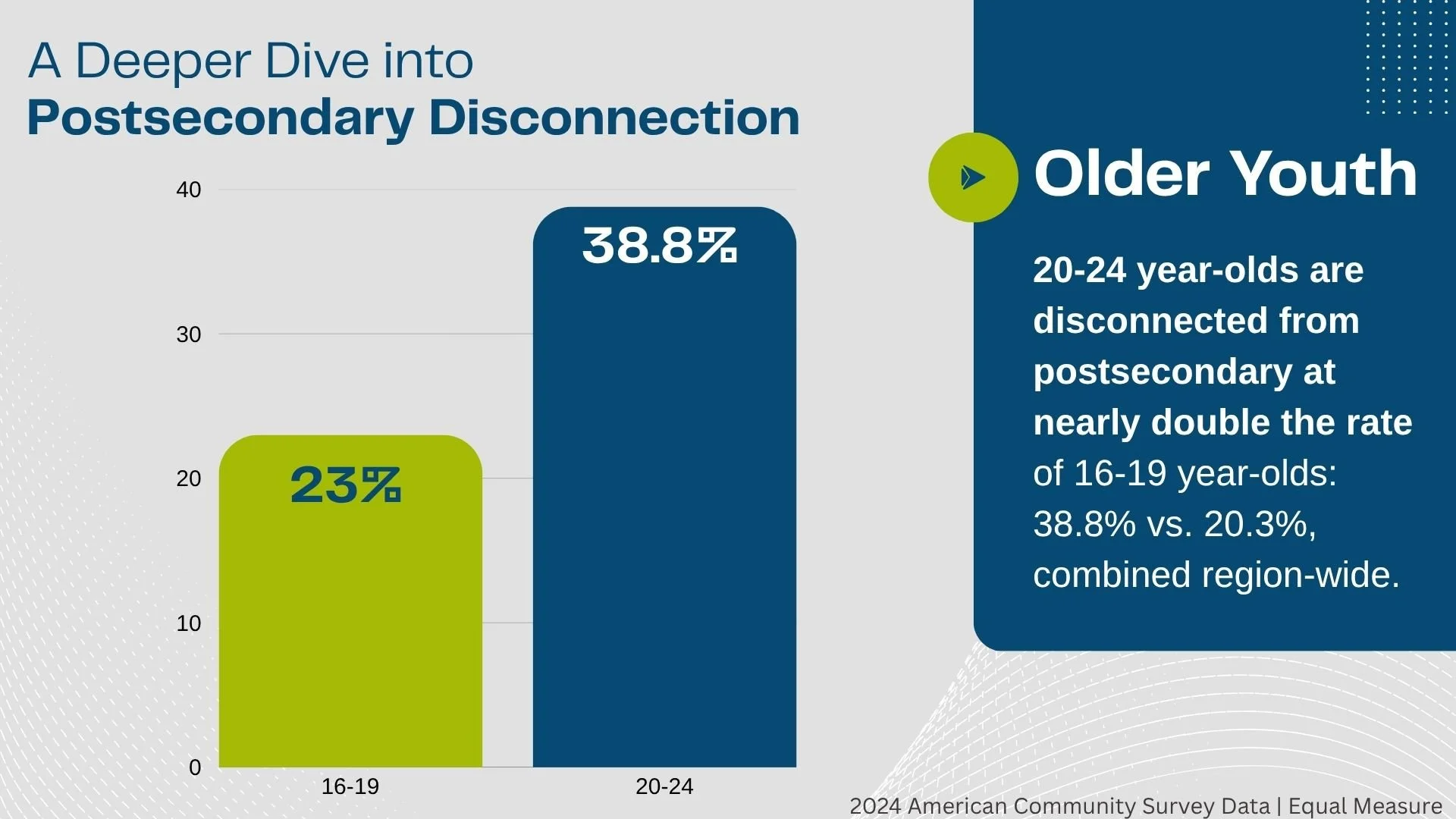
Older youth: 20–24 year-olds are disconnected from postsecondary at nearly double the rate of their younger, 16–19-year-old peers.
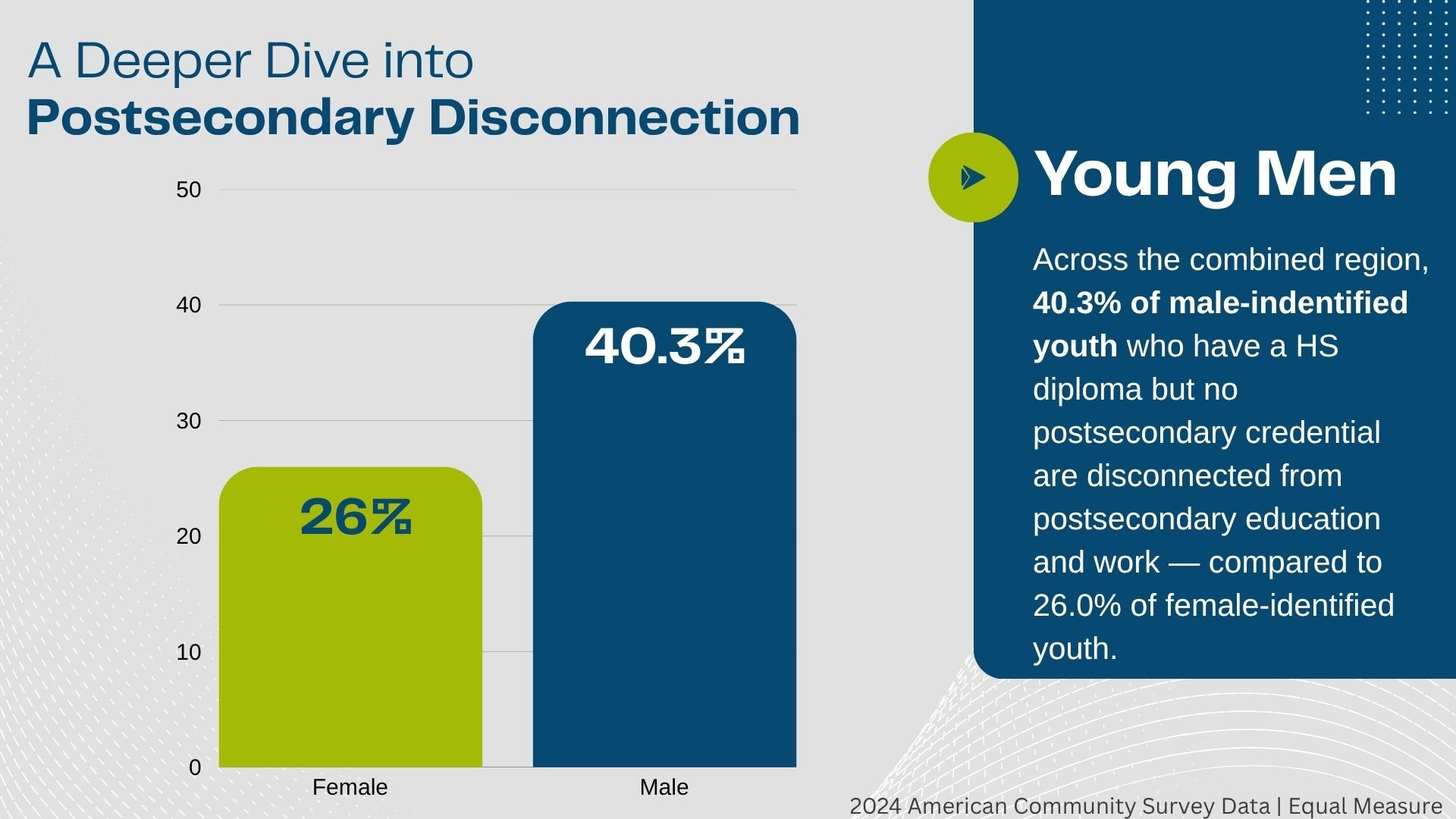
Young men are disconnected from postsecondary at a rate roughly 1.5 times that of young women.
"In our region, the problem isn't finishing high school. It's what comes after, and the transition, bridging, and retention support young people need to get there."
Partner Data Report-Back
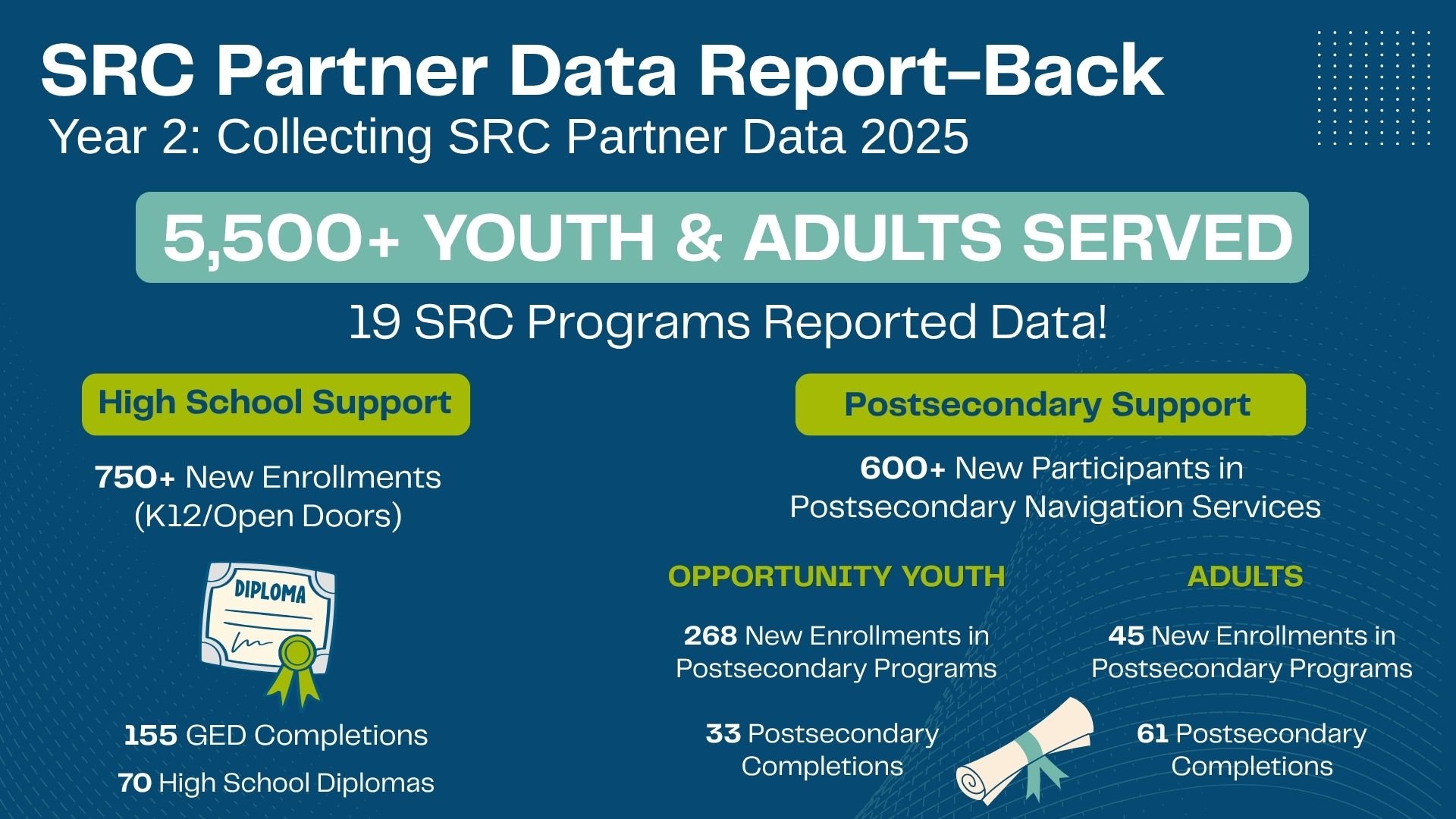
In Year 2 of collecting SRC partner data, 19 programs reported serving 5,500+ youth and adults. Highlights include 750+ new high school enrollments, 600+ new participants in postsecondary navigation, 155 GED completions, 70 high school diplomas, and 94 postsecondary completions.
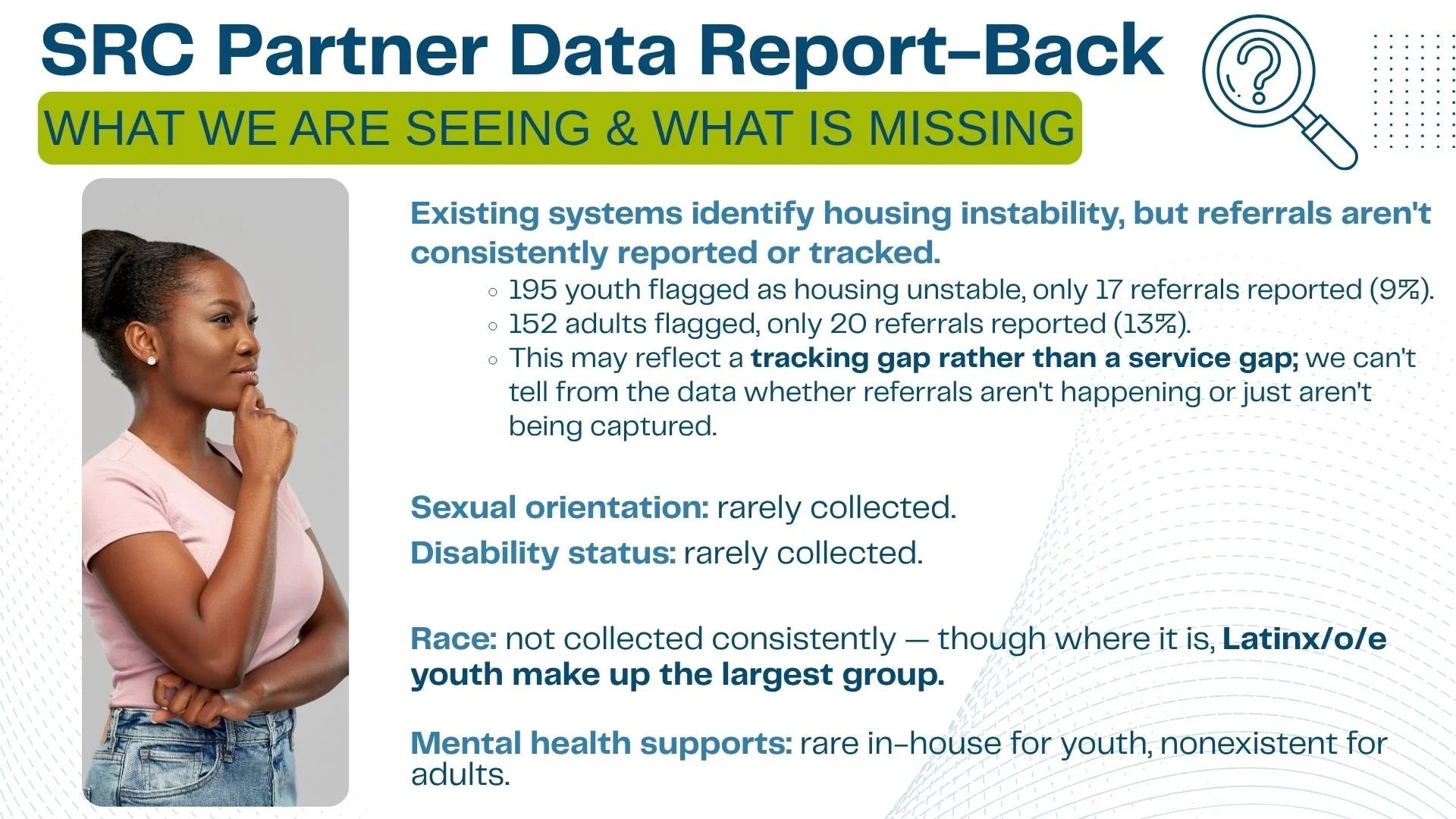
The data also showed us what's missing. Housing instability is being identified, but referrals aren't consistently tracked, and demographic data is collected unevenly across programs. These gaps will help shape our approach to 2026 data collection.
What We Discussed
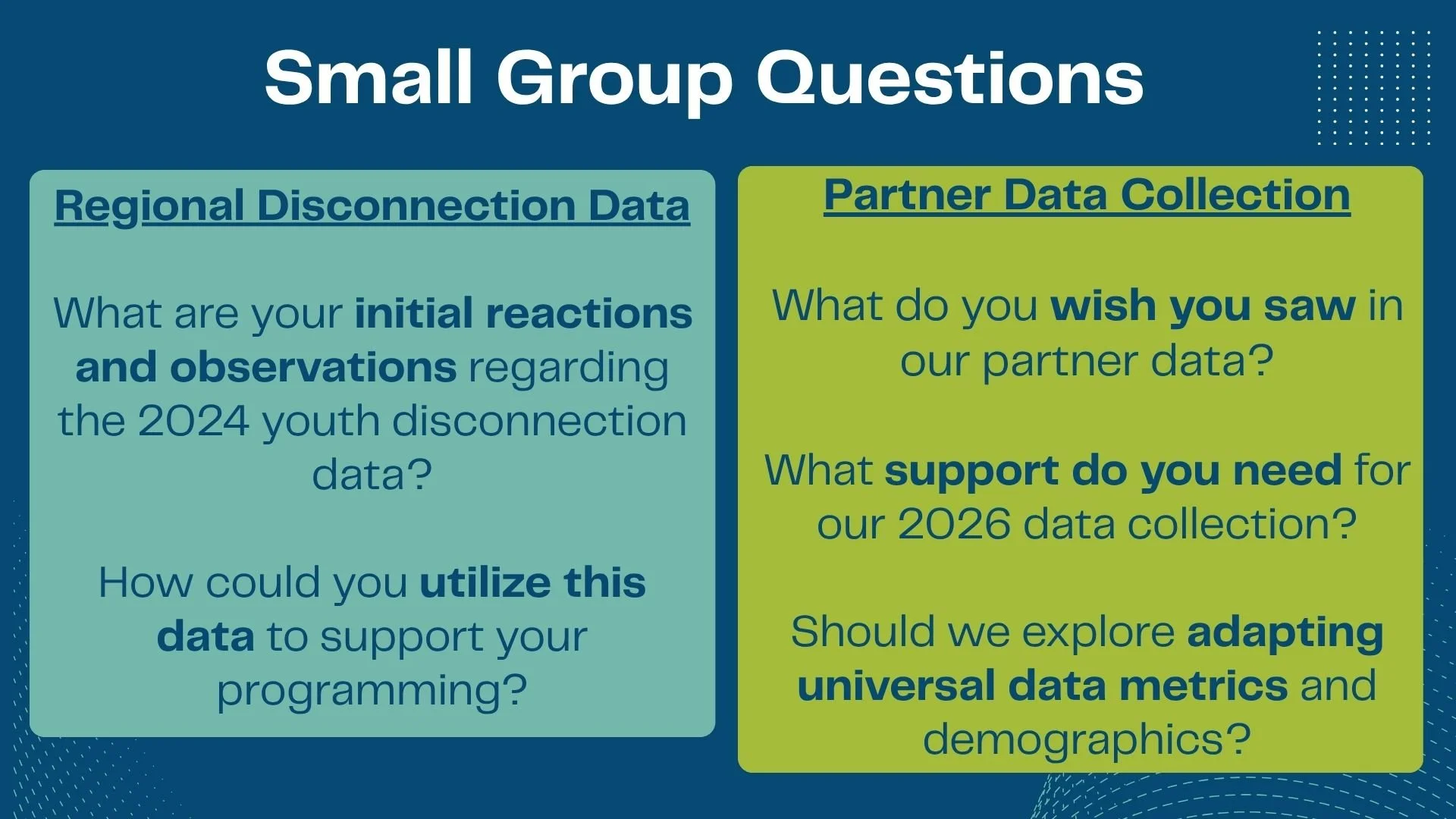
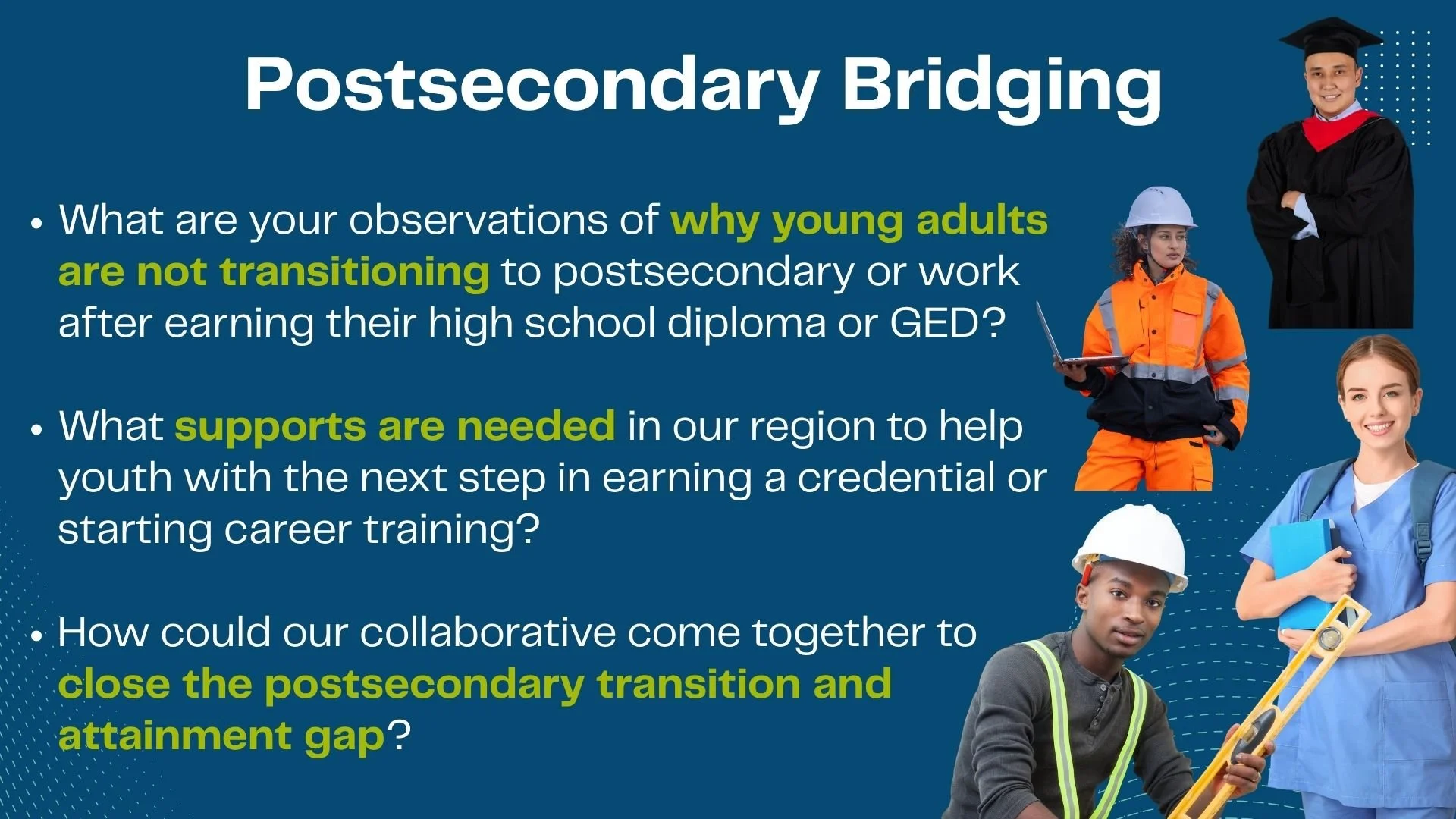
In small groups, partners shared reactions to the data and explored why young adults aren't moving into postsecondary or work after earning a diploma or GED, and what supports our region needs to close that gap. Weren't able to join us? We'd love to hear your thoughts at src@nweducationaccess.org.
What's Next
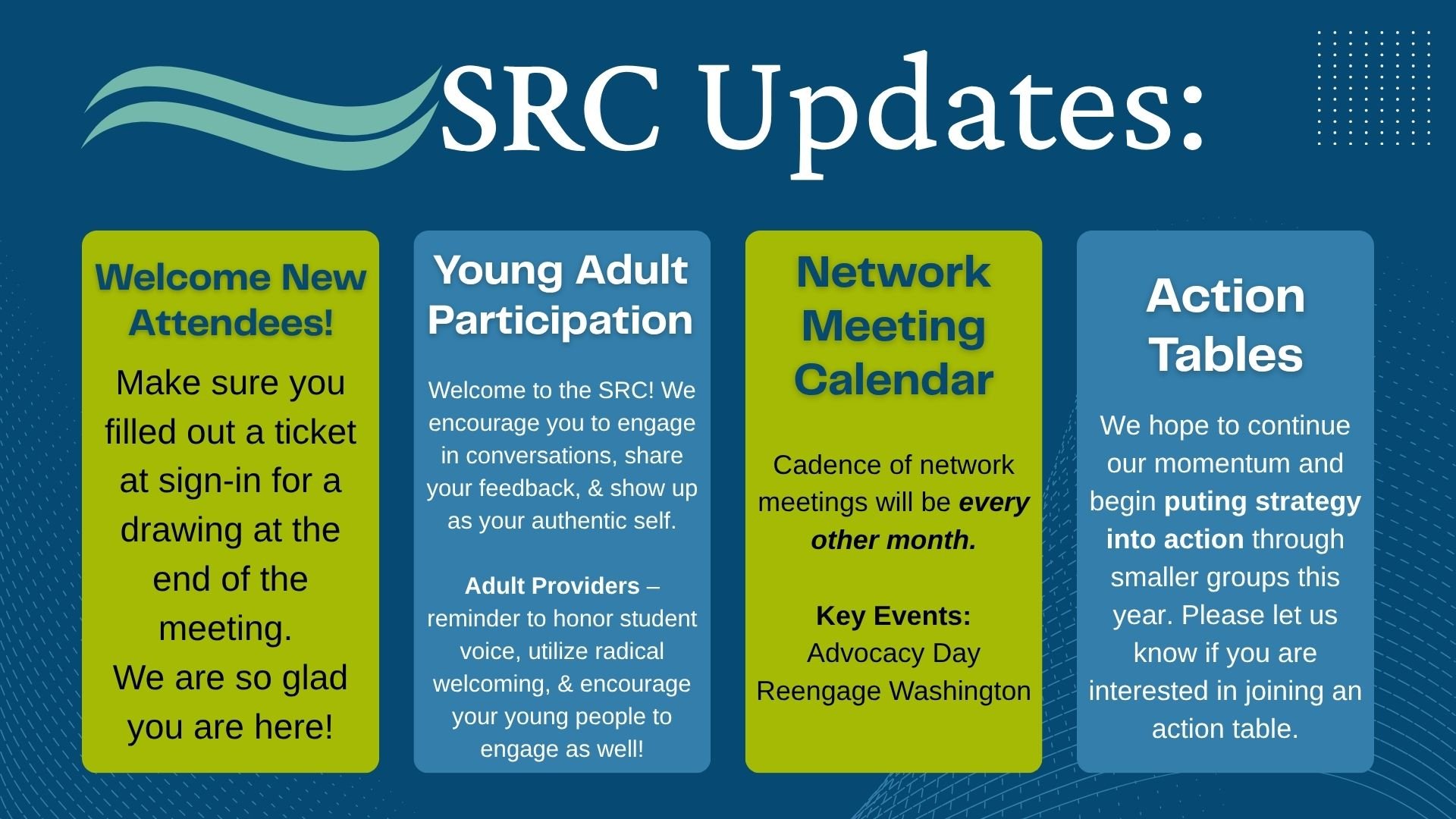
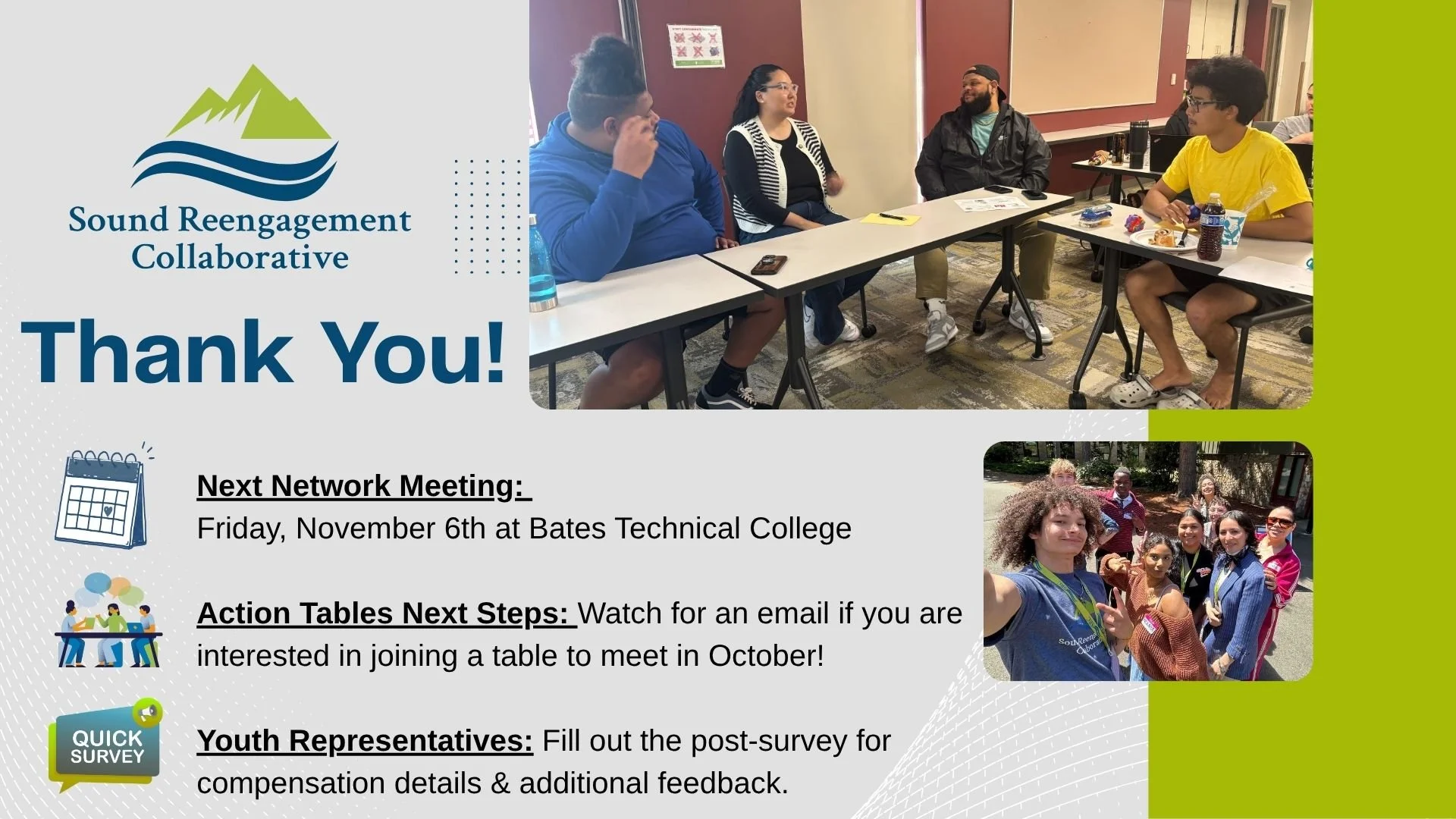
Next Network Meeting: Friday, November 6 at Bates Technical College. Network meetings will now be held every other month.
Action Tables: Smaller groups begin meeting in October. Watch your inbox if you're interested in joining! If you want to join an action table, email us at src@nweducationaccess.org.
Stay Connected
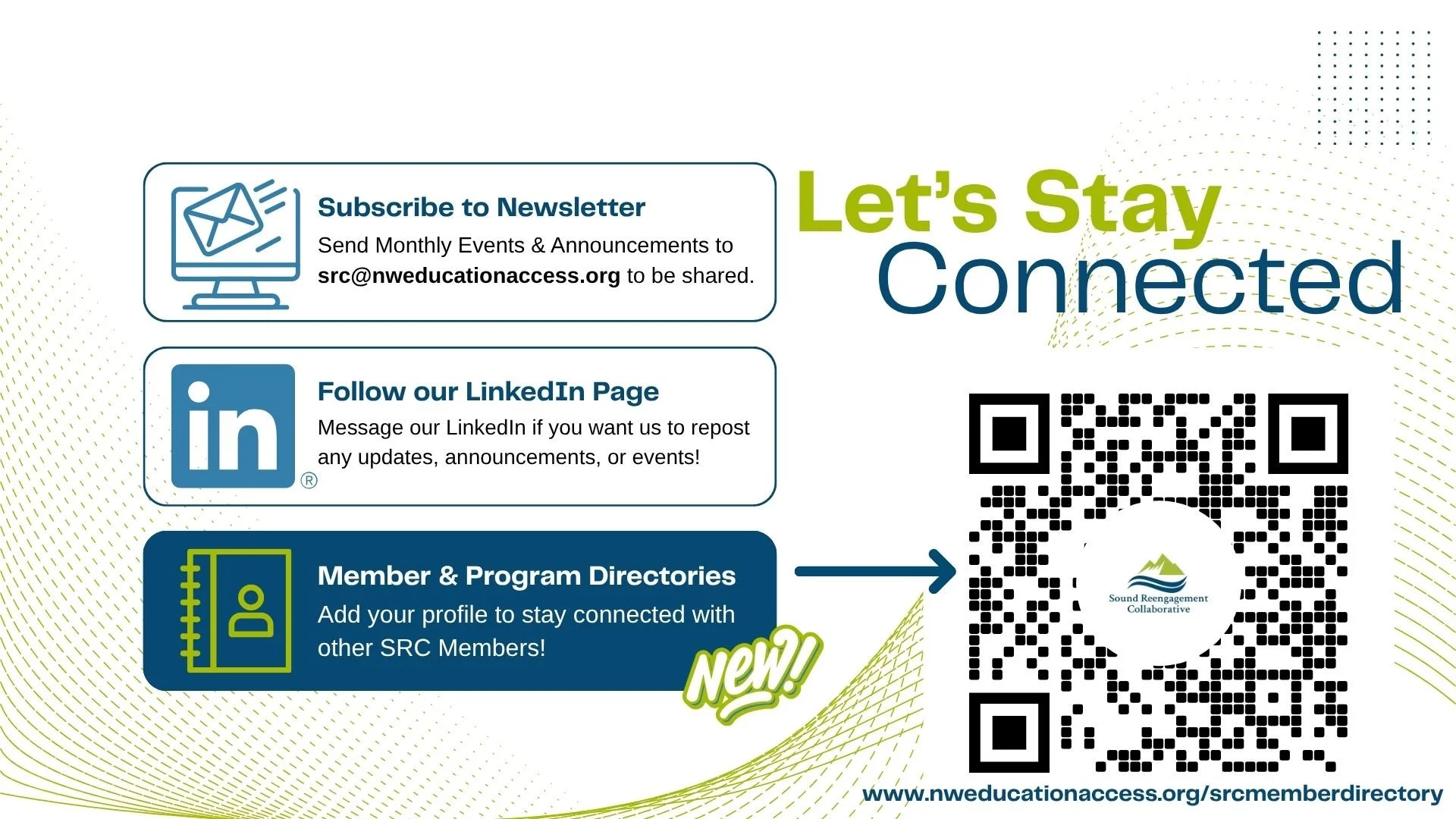
Send events and announcements to src@nweducationaccess.org for our monthly newsletter, follow us on LinkedIn, and add your profile to the SRC Member Directory.
Data source: 2024 American Community Survey | Equal Measure
